


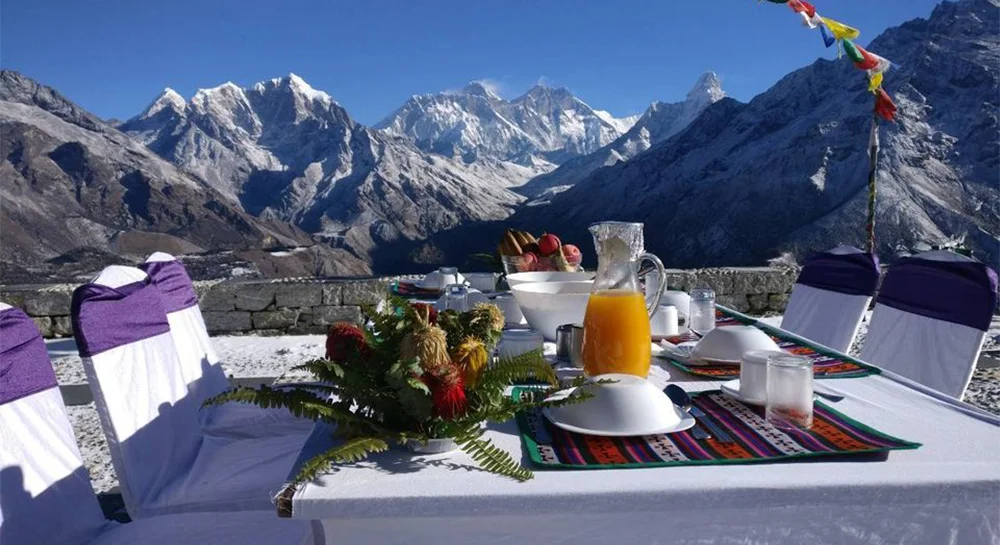


The 4WD journey to Upper Mustang is an amazing adventure. You will travel through the stunning valleys of Mustang with scenic mountain views while getting to experience the ethnic culture of Nepal. As the route entails travelling across the desert-like landscape, barren ridges, deep canyons, eroded cliffs and over 4000 meter high passes – you will be spellbound.
Nestled on the border of Tibet, to the north of the Annapurna range and south of the Tibetan plateau, Mustang was relatively untouched. Till the mid-1960s Mustang was closed to the world, however, in 1992, the Nepalese government reopened the region by special permit.
Upper Mustang is made up of 34 settlements with the most densely populated settlement at Lo Manthang. There are many species of wildlife, many of which are endangered. Much of the Mustang area is made up of high altitude steppe. Vegetation cover is sparse as snow and strong winds accelerate the erosion process. The irrigated alluvial parts are used intensively for cultivation whilst the lower slopes and alpine meadows are used for grazing.
Upper Mustang was once an independent kingdom, although closely tied by language and culture to Tibet. From the 15th century to the 17th century, its strategic location granted Mustang control over the trade between the Himalayas and India. This ancient trade route remained in use until China’s annexation of Tibet in 1950. China revitalized the trade route and in 2001 completed a 20km road from the international border to Lo Manthang. Road construction south of Lo Manthang was difficult due to the Kali Gandaki Gorge but is now complete and is suitable for high clearance and 4wd vehicles only.
Mustang is cold and arid with temperatures plummeting to -25C at times at Lo Manthang. Agriculture is only possible from April to October when the weather is mild. November through February, the land is essentially frozen. Mountain passes are blocked and many settlements are cut-off. Strong winds and high solar radiation are common, and the tough weather conditions cause a large winter migration into the lower regions of Nepal. The 4wd Journey to Upper Mustang is not an adventure that should be taken lightly, and special permits are required for entry into the ‘Forbidden Kingdom”. This and the weather, partly, ensures the number of visitors at a minimum.
The most suitable time to visit is from March to October. Through November to February, it can be cold but still possible to visit. We would be pleased to have you along on this remote wilderness adventure and introduce you to our way of life while you travel as part of my extended family.
Upon arrival at Tribhuvan International Airport in Kathmandu, you will receive by Keep Walking Nepal’s representative and driven to your hotel. Please look for Keep Walking Nepal’s board at the opposite of the arrival gate.
In the evening (depending upon your flight time), we will come together for dinner with Keep Walking Nepal family.
After breakfast, you will experience the three most important sanctuaries of the Kathmandu Valley: Pashupatinath, Boudhanath and Swayambhunath.
The Pashupatinath cremation site in the northeast of the city is one of the most important Hindu shrines. The sacred Bagmati River divides the temple complex into two large areas. On the right bank there are cremation sites and the impressive Pashupathinath Temple, which non-Hindus are not allowed to enter.
From Pashupati it’s a short drive to Boudhanath. The Buddhist Stupa is the largest sacred building of its kind in the entire valley and a great attraction for the numerous Buddhist pilgrims. After lunch at one of the many cafes around Boudha Stupa, you will drive back to your hotel.
At the same time, we will arrange the restricted area permits required for you to visit Upper Mustang
In the morning, you take a scenic flight to Pokhara. On your 25 minutes flight to Pokhara, you get an aerial view of the beautiful lakes, the green forests, and also the snowy mountains.
After check-in at the hotel and some rest, you will cross the Phewa lake on a small boat and hike all the way to World Peace Stupa. The trail passes through small settlements and a thick tropical forest with excellent bird watching opportunities. You can either hike back to Pokhara or take a local cab or bus.
You will start with an early flight to Jomsom Or Dzongsam meaning “New Fort “and walk to a local restaurant for breakfast (if you haven’t had breakfast at your hotel in Pokhara).
After breakfast you will drive on a 4wd to Kagbeni. The drive to Kagbeni (about 15min) is an experience in itself as most of the time you will be driving on the riverbed canyon while crossing several streams. The view is serenading with glimpses of mountains.
Just before you reach Kagbeni you will see an oasis with lush green fields and a mountain backdrop. The village has closely packed mud brick houses, dark alleys and imposing Chortens.
At Kagbeni you can visit the Kag Chode Thupten Samphel Ling Gompa, an important Shakya Pa sect monastery found in 1429, the Kag Khar palace, a ruined palace that used to the fortified palace along the “Salt Trade Route” and the Devthen Chorten.
After lunch at Kagbeni and confirming your permits at the Kagbeni check post you will head towards your overnight destination for the day to Chuksang (approx. 3 hrs. drive from Kagbeni). From Kagbeni onwards you will enter the realm of Upper Mustang.
Chuksang town has 3 separate parts and ruined castle walls on the nearby cliffs making a lovely stop for the night. For those who would like to stretch their legs, we recommend you walk to the nearby picturesque ancient village of Tetang.
After breakfast you will drive towards Syangboche (3,800m; 1.5 hrs. drive), a small village with few houses. En route you will have views of Nigliri on the southern skyline.
You will stop for a visit to the famed Chungsi cave just before Syangboche. The cave is only accessible by foot. The trail is marked by a cairn and steeply descends along the shadow side of the cliff to a gorge. At the bottom flows the Duptak Chu, a tributary of the Mustang Khola.
The Chungsi cave is naturally carved on a side of a cliff. It is said that the great sage Guru Ripomche is meditated on his way to Tibet in the 8th century and fought a fierce battle with a giant demon nearby. On the cave walls are many naturally formed deities which look like paintings. The cave also contains many sacred relics, statues and myths.
After spending some time admiring the natural beauty, culture and relics you will ascend back to Syangboche for lunch and continue the drive towards the beautiful village of Ghami (about 1 hr).
You can either spend the rest of the day at leisure or embark further on to Dhakmar (round trip about 3.5 hrs.)
Dhakmar is a high desert canyon region with astonishingly red cliffs. It is said that Guru Rimpoche had slain the demon Dhak Chhenmaon on request of the Tibetain king Thisong Deuchan, and the demon’s blood painted the cliffs red.
This is an exciting day as at last you will reach the fabled city of Lo Manthang.
En route you will drive across the Ghami river to reach the Charang La pass. The pass offers majestic view of Annapurna, Nilgiri and Bhrikuti. You then drive across a plateau crossing several mani walls to the old capital of the Mustang Kingdom at Tsarang/Charang.
At Charang you will visit the iconic red Thupten Shedrup Monastery which was built in 1385AD and the former 5 storied Palace built in 1378AD.
The Thupten Shedrup Monastery is huge and is perched on the edge of the Kali Gandaki gorge, on the East End of the village.
The ruins of the former palace of the Raja of Mustang is strategically located astride a hill. It’s a steep, short hike up to the palace and although it is now dilapidated, there are great views from here and the small chapel and armory (now a museum) are open to the public. The Palace also has 108 volumes of Kangyur Text engraved in Gold.
Another Upper Mustang destination lies 30 min drive west of Charang and further 10 min hike, Ghar Gompa (Lo Gekar monastery). Ghar Gompa is believed to the first Tibetan Buddhist monastery established by Guru Rinpoche even before the ‘Samye monastery’ in Tibet. After some quick snack at the tea stall you will drive back to Charang and continue onwards to Lo Manthang.
From Tsarang the road drops down into a deep canyon before climbing up the other side. The trail then continues along the Thuling Khola on the new dirt road towards Lo. The multi-hued canyons will spread impressively around you.
You will also start to see a few snow peaks ahead of you as you near the Lo La pass; to the south are the Annapurna peaks and the familiar peak of Nilgiri, to the east is a chain of snow-capped peaks, the largest of which is Bhrikuti(6363m/20,877ft). The pass leads through a partial tunnel of rock, flanked on the right strings of Tibetan prayer flags and then climbs to the ridge to the right for wonderful views down to the fabled city Lo Manthang.
Your 2 night stay will give you ample time to explore the old walled city and the village that has spilt outside of the walls of the old town. Prior to the invasion of Tibet, Lo Manthang was a prosperous center for the salt and wool trade. On the first day, you will visit the 4 storeys Mustang Durbar , Chyodi Gompa, Namgyal Gompa, Tingkhar and Tall Champa Lakhang Gompa.
Note: The Tiji Festival in Lo Manthang is one of the most important and colourful in Mustang. Held annually to chase away demons, it is a time of prayer and dance as monks. Tiji consists of three-day of Tibetan rituals. The Tiji centres around a myth, which tells of a deity named Dorje Jono who must battle against his demon father to save the Kingdom of Mustang from destruction. Tiji comes from the word “Ten Che” meaning the hope of Buddha Dharma prevailing in all worlds and is effectively a spring renewal festival. The date for Tiji Festival 2017 in Lo-Manthang is 21, 22 and 23 May
Note: Yartung Festival in Lo Manthangis the annual horse race held in late July, dates to be confirmed. It involves a week of serious horse racing Tibetan style and riders come from around the area to compete in various events that showcase their horses and riding skills.
In the morning you will drive along the Nepal – China Kora La highway to Chooser Valley. The route is beautiful as you drive past ancient ruins and beautiful scenery.
Chooser valley is famous for Garphu and Nyphu Gompas and the famous Chooser caves aka the Zhong cave. The cave is believed to built by the escapee monks from Tibet and is dug right out on a hill like a rabbit’s borough. The cave has around 40 room or openings and served different purpose in different time. Currently it is preserved as a tourist attraction.
After lunch, you can optionally drive to Kora La; one of the oldest trading passes between Nepal and Tibet or drive back to Lo Manthang.
Bidding farewell to Lo Manthang you will drive for about 6 hours via Charang and Ghami to the small hamlet of Samar.
There are a few houses at Samar; it’s a desert oasis with a beautiful viewpoint.
You will backtrack till Kagbeni and then follow the Jomsom Muktinath highway to the village of Ranipauwa. A 30 min hike away is the famous pilgrimage site of Muktinath which is celebrated by both Hindus and Buddhists.
An annual horse racing festival is held every August or so. The festival is called Yartung Mela.
Click here for more information about Yartung festival, including dates and itinerary.
After visiting the temple and lunch at the village below you will drive to Jomsom.
Early in the morning you will fly back to Pokhara where you have rest of the day at leisure.
You can visit one of the many gift shops, cafes or massage parlors.
You will have the full day at leisure at Pokhara.
You will depart on a morning flight to Kathmandu.
The rest of the day at Kathmandu is at leisure. In the evening, we will organize a dinner party to commemorate your successful tour in Upper Mustang.
After breakfast, we will drive to the international airport for your departure unless further arrangements have been made.
This Itinerary can be changed by your group leader depending upon the client's fitness and weather conditions, your safety and staff safety is our primary concern. You can request to customize this itinerary to suit your preference, except for the Upper Mustang portion.
| Start | Finish | Availability | Price | |
|---|---|---|---|---|
| Thursday 16/04/2026 | Tuesday 28/04/2026 | Trip Status available | Starting from $4475 | Book Now |
| Thursday 07/05/2026 | Wednesday 27/05/2026 | Trip Status available | Starting from $4475 | Book Now |
| Sunday 07/06/2026 | Friday 19/06/2026 | Trip Status available | Starting from $4475 | Book Now |
| Friday 16/04/2027 | Wednesday 28/04/2027 | Trip Status available | Starting from $4475 | Book Now |
| Friday 07/05/2027 | Thursday 27/05/2027 | Trip Status available | Starting from $4475 | Book Now |
| Monday 07/06/2027 | Saturday 19/06/2027 | Trip Status available | Starting from $4475 | Book Now |
Here is a list of what you might want to pack for the hike. Please take this as a starting point. You’ll need layers of warmer clothing during the winter. We provide a 75 liter duffel bag for you to use for the trek. It will be given to you during your pre-trip meeting in Kathmandu. The duffle bag is yours to keep. Also, you can rent sleeping bag and down jacket with us at the additional fee of USD 35 for each once you are in Kathmandu.

Enter a recent customer’s contact info and we’ll ask them to leave you a review.
In April 2023, over 13 fantastic days, my two 15 year old sons and I (49 years old, mum) trekked from Lukla to Everest Base Camp with Keep Walking Nepal. This was our first holiday in Nepal. It was an
We had the most marvellous time with our guide Pratap venturing to EBC and back! We were well looked after and went at a great pace. We thoroughly enjoyed the hilarious banter with Pratap and the wisd
I did the Everest Base Camp Trek in November 2015 (the earliest trip advisor will let me go back is November 2017). This was a highly organized, safe and very enjoyable experience. My guide, Pratap, w
Spent time with Ang hiking through the Kumbhu Valley. Highly rate his service and experience. Already planning the next trip back to see him!
it was the best experience I’ve ever had . id like to thank Mr.Pratap who was our main guid for this trek. he is a really nice person and took care of me as well as my group , he was patient and had
It was very exciting moment with your team “Keep Walking Nepal”.
I have travelled twice With Keep Walking Nepal, and I have no doubt in recommanding these guys. My first KWN-trek was a trek from Phaplu to the Junbesi area. Our KWN-guide was like an eagle to monitor
Keep Walking Nepal provided an excellent guiding experience allowing our team of 3 to safely and affordably complete the three passes over 20 days. I can’t recommend these guys enough.
Trekking to Base Camp when you are 60 and you only like hiking sort day hikes was something I never thought I’d do but it was on my husband’s bucket list. We decided to make it a family affair. Th

We went with KWN for a 3-week trip to the 3 passes and Everest Base Camp in October 2017. To sum it up, we had an absolutely fantastic experience. Their organisation was flawless throughout – e.g. f
We had a wonderful time; they were extremely helpful and very well organised. Big thanks to Ang, Chopel and Mr Yum Yum
I did the Everest Circuit trek (Gokyo Lakes – Chola Pass – Kala Pittar / Everest Base Camp) with Ang Tshering Sherpa as my guide. It was my first trip overseas and one that I had been itching to d
We had a awesome trip, Pratap Gurung was our guide from Keep Walking and he was a fantastic guide super chilled out but always helpful and full of local knowledge. We did a hike up to Gokyo Ri and the
With extensive local knowledge and friendly, helpful service, I cannot recommend Keep Walking enough. They guided myself and my partner on both my first and second trip to Nepal, vesting Lang Tang Val
Keep Walking Nepal was highly recommended to me by a friend who went on a trek with the owner years ago, and I am so glad that we chose them as our trekking agency. The owner and staff are friendly, h
I would give 6 stars if I could. This trip was unbelievably fantastic, everything about it. WOW, WOW, WOW. A trip beyond expectations. The scenery, people, villages, culture, food – all totally capt
I am one of 8 Australian women who booked Ama Dablam base camp hike in mid 2017 and just completed the hike in early May 2018. I actually heard about Ang’s family many years ago from Keep Walking SA
From initial email contact prior to the trip, right through to ensuring that we had the best rooms available, our recent experience with Keep Walking Nepal was perfect from start to finish. Being 65+
The best trip I have done in Nepal. This journey had it all from jaw dropping scenery to amazing destinations. KEEP WALKING NEPAL organised a fantastic itinerary that suited all our needs. We were a m
I and my friend Jill signed up with Keep Walking Nepal to trek the Langtang Valley to the village of Langtang. It was an amazing experience. We had a guide Pratap who was very knowledgeable and always
Recently returned from a fantastic trek along the Everest Base Camp trail as far as Deboche, arranged by Ang Tshering Sherpa and Keep Walking Nepal. From the initial greeting at KTM airport through to
My nephew and I recently completed a one-week trek along the Everest Base Camp trail arranged by Keep Walking Nepal, and we couldn’t be more happy with our choice of trekking agency. As we only had
Keep Walking Nepal describes itself as a family business. It is.This is KWN’s strength. My daughter Bonnie and I had randomly chosen KWN for our 15 day Everest Region trek. At first, we had some dou
I trekked with Ang and team in the Everest Region and had the most amazing journey. (It was several years before March 2017, but that was the choice provided in the menu) We saw the beautiful sights a
Most incredible adventure with the most amazing guide Pratap Gurung and Som our porter. We spent 2 weeks trekking Gokyo lakes and it was everything i ever imagined it would be and more. This was thank
Trek with ang is always the best Had a wonderful time Thank you for your hospitality I will again visit Nepal ang
An absolutely amazing experience trekking through Nepal and made effortless through the exceptional organising of Keep Walking Nepal! Our Sherpa was extremely experienced and provided us with an amazi
This trip was the best one I had so far thanked you so much for your kind hospitality loved the trek Keep going until next time.
Another great trip with this company, Ang always delivers for us, and we are never disappointed. Gokyo lakes is a great location to trek to, we have done it twice last time in 2010. Thank you to Ang a
Keep Walking Nepal describes itself as a family business. It is.This is KWN’s strength. My daughter Bonnie and I had randomly chosen KWN for our 15 day Everest Region trek. At first, we had some dou
In April 2023, over 13 fantastic days, my two 15 year old sons and I (49 years old, mum) trekked from Lukla to Everest Base Camp with Keep Walking Nepal. This was our first holiday in Nepal. It was an
We had the most marvellous time with our guide Pratap venturing to EBC and back! We were well looked after and went at a great pace. We thoroughly enjoyed the hilarious banter with Pratap and the wisd
I did the Everest Base Camp Trek in November 2015 (the earliest trip advisor will let me go back is November 2017). This was a highly organized, safe and very enjoyable experience. My guide, Pratap, w
Spent time with Ang hiking through the Kumbhu Valley. Highly rate his service and experience. Already planning the next trip back to see him!
it was the best experience I’ve ever had . id like to thank Mr.Pratap who was our main guid for this trek. he is a really nice person and took care of me as well as my group , he was patient and had
It was very exciting moment with your team “Keep Walking Nepal”.
I have travelled twice With Keep Walking Nepal, and I have no doubt in recommanding these guys. My first KWN-trek was a trek from Phaplu to the Junbesi area. Our KWN-guide was like an eagle to monitor
Keep Walking Nepal provided an excellent guiding experience allowing our team of 3 to safely and affordably complete the three passes over 20 days. I can’t recommend these guys enough.
Trekking to Base Camp when you are 60 and you only like hiking sort day hikes was something I never thought I’d do but it was on my husband’s bucket list. We decided to make it a family affair. Th
We went with KWN for a 3-week trip to the 3 passes and Everest Base Camp in October 2017. To sum it up, we had an absolutely fantastic experience. Their organisation was flawless throughout – e.g. f
We had a wonderful time; they were extremely helpful and very well organised. Big thanks to Ang, Chopel and Mr Yum Yum
I did the Everest Circuit trek (Gokyo Lakes – Chola Pass – Kala Pittar / Everest Base Camp) with Ang Tshering Sherpa as my guide. It was my first trip overseas and one that I had been itching to d
We had a awesome trip, Pratap Gurung was our guide from Keep Walking and he was a fantastic guide super chilled out but always helpful and full of local knowledge. We did a hike up to Gokyo Ri and the
With extensive local knowledge and friendly, helpful service, I cannot recommend Keep Walking enough. They guided myself and my partner on both my first and second trip to Nepal, vesting Lang Tang Val
Keep Walking Nepal was highly recommended to me by a friend who went on a trek with the owner years ago, and I am so glad that we chose them as our trekking agency. The owner and staff are friendly, h
I would give 6 stars if I could. This trip was unbelievably fantastic, everything about it. WOW, WOW, WOW. A trip beyond expectations. The scenery, people, villages, culture, food – all totally capt
I am one of 8 Australian women who booked Ama Dablam base camp hike in mid 2017 and just completed the hike in early May 2018. I actually heard about Ang’s family many years ago from Keep Walking SA
From initial email contact prior to the trip, right through to ensuring that we had the best rooms available, our recent experience with Keep Walking Nepal was perfect from start to finish. Being 65+
The best trip I have done in Nepal. This journey had it all from jaw dropping scenery to amazing destinations. KEEP WALKING NEPAL organised a fantastic itinerary that suited all our needs. We were a m
I and my friend Jill signed up with Keep Walking Nepal to trek the Langtang Valley to the village of Langtang. It was an amazing experience. We had a guide Pratap who was very knowledgeable and always
Recently returned from a fantastic trek along the Everest Base Camp trail as far as Deboche, arranged by Ang Tshering Sherpa and Keep Walking Nepal. From the initial greeting at KTM airport through to
My nephew and I recently completed a one-week trek along the Everest Base Camp trail arranged by Keep Walking Nepal, and we couldn’t be more happy with our choice of trekking agency. As we only had
We have not long returned from a trek to Lo Mantang with Keep Walking Nepal. It wasn’t our first trip with Ang’s team & we never hesitate to use them for a special experience trekking. Our gui
Keep Walking Nepal describes itself as a family business. It is.This is KWN’s strength. My daughter Bonnie and I had randomly chosen KWN for our 15 day Everest Region trek. At first, we had some dou
I trekked with Ang and team in the Everest Region and had the most amazing journey. (It was several years before March 2017, but that was the choice provided in the menu) We saw the beautiful sights a
Most incredible adventure with the most amazing guide Pratap Gurung and Som our porter. We spent 2 weeks trekking Gokyo lakes and it was everything i ever imagined it would be and more. This was thank
Trek with ang is always the best Had a wonderful time Thank you for your hospitality I will again visit Nepal ang
An absolutely amazing experience trekking through Nepal and made effortless through the exceptional organising of Keep Walking Nepal! Our Sherpa was extremely experienced and provided us with an amazi
This trip was the best one I had so far thanked you so much for your kind hospitality loved the trek Keep going until next time.
Another great trip with this company, Ang always delivers for us, and we are never disappointed. Gokyo lakes is a great location to trek to, we have done it twice last time in 2010. Thank you to Ang a
Keep Walking Nepal describes itself as a family business. It is.This is KWN’s strength. My daughter Bonnie and I had randomly chosen KWN for our 15 day Everest Region trek. At first, we had some dou
In April 2023, over 13 fantastic days, my two 15 year old sons and I (49 years old, mum) trekked from Lukla to Everest Base Camp with Keep Walking Nepal. This was our first holiday in Nepal. It was an
We had the most marvellous time with our guide Pratap venturing to EBC and back! We were well looked after and went at a great pace. We thoroughly enjoyed the hilarious banter with Pratap and the wisd
I did the Everest Base Camp Trek in November 2015 (the earliest trip advisor will let me go back is November 2017). This was a highly organized, safe and very enjoyable experience. My guide, Pratap, w
Spent time with Ang hiking through the Kumbhu Valley. Highly rate his service and experience. Already planning the next trip back to see him!
it was the best experience I’ve ever had . id like to thank Mr.Pratap who was our main guid for this trek. he is a really nice person and took care of me as well as my group , he was patient and had
It was very exciting moment with your team “Keep Walking Nepal”.
I have travelled twice With Keep Walking Nepal, and I have no doubt in recommanding these guys. My first KWN-trek was a trek from Phaplu to the Junbesi area. Our KWN-guide was like an eagle to monitor
Keep Walking Nepal provided an excellent guiding experience allowing our team of 3 to safely and affordably complete the three passes over 20 days. I can’t recommend these guys enough.
Trekking to Base Camp when you are 60 and you only like hiking sort day hikes was something I never thought I’d do but it was on my husband’s bucket list. We decided to make it a family affair. Th
We went with KWN for a 3-week trip to the 3 passes and Everest Base Camp in October 2017. To sum it up, we had an absolutely fantastic experience. Their organisation was flawless throughout – e.g. f
We had a wonderful time; they were extremely helpful and very well organised. Big thanks to Ang, Chopel and Mr Yum Yum
I did the Everest Circuit trek (Gokyo Lakes – Chola Pass – Kala Pittar / Everest Base Camp) with Ang Tshering Sherpa as my guide. It was my first trip overseas and one that I had been itching to d
We had a awesome trip, Pratap Gurung was our guide from Keep Walking and he was a fantastic guide super chilled out but always helpful and full of local knowledge. We did a hike up to Gokyo Ri and the
With extensive local knowledge and friendly, helpful service, I cannot recommend Keep Walking enough. They guided myself and my partner on both my first and second trip to Nepal, vesting Lang Tang Val
Keep Walking Nepal was highly recommended to me by a friend who went on a trek with the owner years ago, and I am so glad that we chose them as our trekking agency. The owner and staff are friendly, h
I would give 6 stars if I could. This trip was unbelievably fantastic, everything about it. WOW, WOW, WOW. A trip beyond expectations. The scenery, people, villages, culture, food – all totally capt
I am one of 8 Australian women who booked Ama Dablam base camp hike in mid 2017 and just completed the hike in early May 2018. I actually heard about Ang’s family many years ago from Keep Walking SA
From initial email contact prior to the trip, right through to ensuring that we had the best rooms available, our recent experience with Keep Walking Nepal was perfect from start to finish. Being 65+
The best trip I have done in Nepal. This journey had it all from jaw dropping scenery to amazing destinations. KEEP WALKING NEPAL organised a fantastic itinerary that suited all our needs. We were a m
I and my friend Jill signed up with Keep Walking Nepal to trek the Langtang Valley to the village of Langtang. It was an amazing experience. We had a guide Pratap who was very knowledgeable and always
Recently returned from a fantastic trek along the Everest Base Camp trail as far as Deboche, arranged by Ang Tshering Sherpa and Keep Walking Nepal. From the initial greeting at KTM airport through to
My nephew and I recently completed a one-week trek along the Everest Base Camp trail arranged by Keep Walking Nepal, and we couldn’t be more happy with our choice of trekking agency. As we only had
We have not long returned from a trek to Lo Mantang with Keep Walking Nepal. It wasn’t our first trip with Ang’s team & we never hesitate to use them for a special experience trekking. Our gui
Keep Walking Nepal describes itself as a family business. It is.This is KWN’s strength. My daughter Bonnie and I had randomly chosen KWN for our 15 day Everest Region trek. At first, we had some dou
I trekked with Ang and team in the Everest Region and had the most amazing journey. (It was several years before March 2017, but that was the choice provided in the menu) We saw the beautiful sights a
Most incredible adventure with the most amazing guide Pratap Gurung and Som our porter. We spent 2 weeks trekking Gokyo lakes and it was everything i ever imagined it would be and more. This was thank
Trek with ang is always the best Had a wonderful time Thank you for your hospitality I will again visit Nepal ang
An absolutely amazing experience trekking through Nepal and made effortless through the exceptional organising of Keep Walking Nepal! Our Sherpa was extremely experienced and provided us with an amazi
This trip was the best one I had so far thanked you so much for your kind hospitality loved the trek Keep going until next time.
Another great trip with this company, Ang always delivers for us, and we are never disappointed. Gokyo lakes is a great location to trek to, we have done it twice last time in 2010. Thank you to Ang a
Keep Walking Nepal describes itself as a family business. It is.This is KWN’s strength. My daughter Bonnie and I had randomly chosen KWN for our 15 day Everest Region trek. At first, we had some dou
