




All Foreign / NRI Nationals are required to obtain Mainland China Visa in their home country as the visa processing time in Kathmandu by The China Embassy takes minimum 7-8 Working Days. Therefore, we strongly suggest that the clients arrive to Kathmandu with Mainland China Visa to avoid any delays. The Year 2026 is The Horse Year which occurs once every 12 years. It is believed that a Single Yatra during The Horse Year is equivalent to 12 Kailash Yatra. A large number of local Tibetans as well as Chinese tourist will be travelling to The Kailash area next year. Therefore, we suggest timely booking for the trip.
Tibet is a plateau region in Asia, north-east of the Himalayas, in the People’s Republic of China. It is the traditional homeland of the Tibetan people as well as some other ethnic groups such as Monpas, Qiang, and Lhobas, and is now also inhabited by considerable numbers of Han and Hui people. Tibet is the highest region on Earth, with an average elevation of 4,900 metres (16,000 ft).
On our Tibet Cultural Journey, you get to explore the largest and highest plateau on earth with an average altitude of over 4,000 meters. Its unique Buddhist culture, rare wildlife, snow-capped mountains, deep tropical rain-forests and open pastureland are the hidden treasures to be explored. In addition, the Yarlung Tsangbo River, ancient ruins, palaces, monasteries and religious cultural heritage are other fascinating features of the land.
Tibet Cultural Journey also offers an overload to your senses, with smells, tastes and colors you have never experienced previously. For good or for bad, you’ll discover the fetid odor of yak butter and incense that smacks of hashish. You’ll taste rich, savory stews of spicy yak, crisp Asian pears, and sweet local melons. You will enjoy one of the most adventurous, scenically stunning and physically demanding overland trips in the world as we travel from Kathmandu through vast landscapes, glittering peaks, high mountain passes, remote high altitude deserts, and densely forested precipitous gorges; all virtually unpopulated at high altitudes. It is a journey of scenic and religious discovery of the land and self.
We would be pleased to have you on our 16-day Tibet cultural journey and introduce you to the Tibetan country and ways of life with our Tibetan counterparts, all while travelling as part of my extended family.
Our representative will pick you up at Kathmandu International Airport and drive you to your hotel. Depending upon what time you arrive, you can enjoy a full day at leisure and go on a welcome dinner with the KEEP WALKING FAMILY.
Once you exit the airport terminal, look for the KEEP WALKING NEPAL (KWN) board behind the railing.
For all Tibet programs, you will visit the China Visa Application Service Center in Kathmandu for biometric information. We will brief you on the visa application and arrange the logistics.
Today you will venture on a guided walking tour of two UNESCO world heritage sites; the Swayambhunath stupa, a.k.a the monkey temple, and the Kathmandu Durbar Square, locally known as Basantapur.
The Swayambhunath Stupa is one of the oldest in Nepal, and the stupa complex encompasses numerous shrines and monasteries. Basantapur is within walking distance from Swayambhunath Stupa and houses numerous temples, the house of the living goddess, Kumari, Hanumandhoka Palace Museum, Tribhuvan Museum and many more attractions.
In the late afternoon/early evening, a KWN representative will brief you about the Tibet tour, preparation requirements and dos and don’ts.
You will start your Tibet tour with a mesmerising flight over the Himalayas to Lhasa Gonggar Airport. Throughout the flight, you’ll witness the awe-inspiring vistas of snow-capped peaks like Mount Everest, lush valleys, and meandering rivers.
Upon arrival at Gonggar Airport, you will drive to Lhasa through the Tibetan Plateau while soaking in stunning views of golden plains, rolling hills, and glimpses of Tibetan culture.
In Lhasa: in the morning we visit Potala palace, winter residence of the Dalai Lama built in the 17th century by the fifth Dalai Lama. In the afternoon we explore the Sera monastery and watch the monk’s debate.
In the morning, we visit the stunning Norbulingka, the Dalai Lama’s summer home. The Norbulingka palace was built in the 18th century and has a vast garden decorated with colourful flowers and old trees. It is famous for its tranquil splendouris; a unique representation of Tibetan palace architecture in surrounding gardens.
In the afternoon we visit the Drepung monastery, one of the ‘great three’ monasteries of Tibet.
On our last day in Lhada, we visit the Jokhang temple – the most sacred Tibetan monastery, which is surrounded by Bharkor market – one of the country’s main tourisit shopping areas.
After lunch we have free time for shopping and later, an evening of Tibetan food with a culture show.
Today’s drive takes us through captivating landscapes; rolling hills, vast plains, and charming Tibetan villages.
Bidding farewell to Lhasa, we will continue your Tibet tour crossing Kamba La pass (5050m) and Karo La pass (5045m). We will pause at the former to enjoy the scenic views of Yamdruk Tso, a sparkling turquoise lake among snowcapped mountains, and then travel on to Nagartse for lunch.
Moving on again, we pause at the Karo La pass with a close view of Mt. Nojin Kangtsen, one of Tibet’s secret mountains.
At Gyantse, the key attractions are the Pelkor Monastery and Gyantse Kumbum, which we visit on the next day, and the Far view of Gyangtse Fortress.
Today is a relatively short day.
After breakfast, we visit the Kumbum Monastery, have lunch, then drive approximately 90km to Shigatse (3900m). Again, the scenic drive presents a delightful offering of fascinating landscapes, rolling hills and Tibetan villages.
After a much-needed rest, you resume exploring the sights and sounds of Tibet.
You start with the Tashilhunpo Monastery which holds the future Buddha’s golden shrine. It is the home of Panchen Lama, the 2nd highest rank in the Tibetan Buddhist religious hierarchy), and with its magnificent architecture and rich history is a popular destination.
This monastery is the seat of the Panchen Lama, We also visit Shigatse Market, then view the panorama of Shigatse Dzong (fort) with its architecture reminiscent of the Potala Palace.
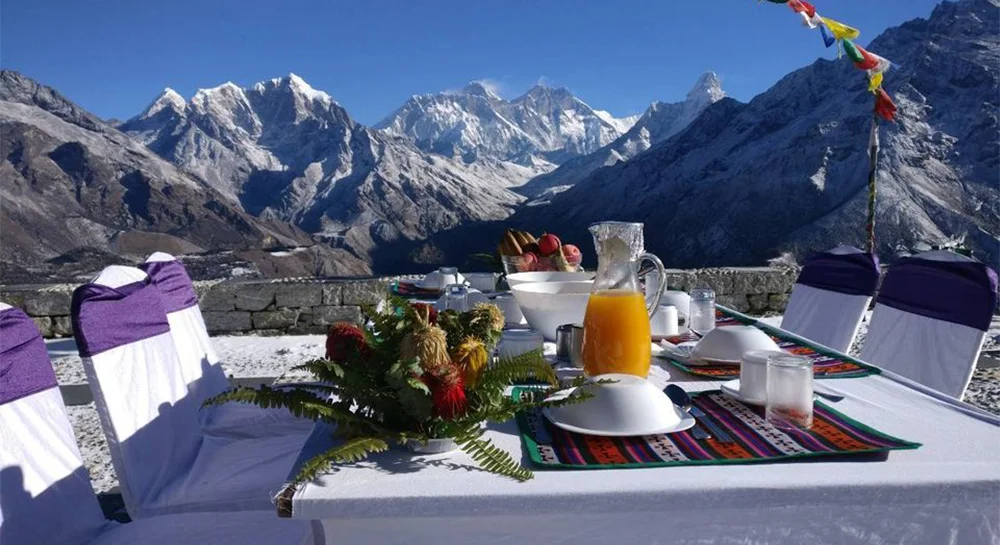
We inch closer to the highlight of our trip, Mount Everest, as we drive through the Tibetan Plateau from Shigatse to New Tingri. The scenic drive offers a unique blend of high-altitude landscapes and cultural richness.
As we leave Shigatse, the road winds through expansive plains, surrounded by the towering peaks of the Himalayas. The landscape transitions from fertile valleys to arid plateaus, creating a stark but stunning contrast.
On the journey, we will pass through remote Tibetan villages, where traditional architecture and prayer flags showcase the region’s unique cultural identity. All-in-all, today’s journey is full of awe-inspiring views where we can sense the vast, untouched beauty of the Tibetan highlands.
We will start the journey with a drive to Rongbuk monastery (4980m) on a dirt road, having left the main Friendship Highway.
As we cross the Pang-La Pass (5200m), the sky opens up to panaromic view of several mountains above 8,000 meters including Mt. Lhotse (8516m), Mt. Everest (8848m), Mt. Cho-oyu (8201m), and Mt. Makalu (8463m) on clear days.
Rongbuk Monastery is the highest in the world, and we will get there by the afternoon.
Drive a short distance to visit Everest base camp after an early breakfast, then return to Rongbuk for lunch. Then drive back to Kerung.
This is your last day in Tibet. You will drive towards the friendship bridge on winding downhill roads with fantastic views of beautiful waterfalls to the Bhotekoshi River which separates Tibet from Nepal.
After the border crossing formalities on the Tibet and Nepal side, you will drive through diverse landscapes, offering a blend of natural beauty and cultural richness. As you depart Kerung, you’ll traverse rugged terrains on narrow roads etched on the side of mountains.
The road leads through Rasuwa, where lush greenery and terraced fields create a picturesque scene. Continuing the descent, you’ll pass through Nuwakot, known for its ancient architecture and historical significance. The route offers glimpses of traditional Nepali villages, winding rivers, and eventually brings you to the vibrant city of Kathmandu, completing a memorable and scenic cross-country adventure.
Today is a rest day. You can simply chill in your hotel, visit other sights and sounds in the Kathmandu valley, check out the local food, or go on a souvenir hunting spree.
A Keep Walking Nepal representative will drive you to the Kathmandu International Airport at an appropriate time for your flight back home.
To join one of our adventures, please complete and sign the booking form together with the Warning / Release / Indemnity form (please check the links below) and email it to angsherpa@keepwalkingnepal.com
Here is a list of what you might want to pack for the hike. Please take this as a starting point. You’ll need layers of warmer clothing during the winter. We provide a 75 liter duffel bag for you to use for the trek. It will be given to you during your pre-trip meeting in Kathmandu. The duffle bag is yours to keep. Also, you can rent sleeping bag and down jacket with us at the additional fee of USD 35 for each once you are in Kathmandu.
Enter a recent customer’s contact info and we’ll ask them to leave you a review.
In April 2023, over 13 fantastic days, my two 15 year old sons and I (49 years old, mum) trekked from Lukla to Everest Base Camp with Keep Walking Nepal. This was our first holiday in Nepal. It was an
We had the most marvellous time with our guide Pratap venturing to EBC and back! We were well looked after and went at a great pace. We thoroughly enjoyed the hilarious banter with Pratap and the wisd
I did the Everest Base Camp Trek in November 2015 (the earliest trip advisor will let me go back is November 2017). This was a highly organized, safe and very enjoyable experience. My guide, Pratap, w
Spent time with Ang hiking through the Kumbhu Valley. Highly rate his service and experience. Already planning the next trip back to see him!
it was the best experience I’ve ever had . id like to thank Mr.Pratap who was our main guid for this trek. he is a really nice person and took care of me as well as my group , he was patient and had
It was very exciting moment with your team “Keep Walking Nepal”.
I have travelled twice With Keep Walking Nepal, and I have no doubt in recommanding these guys. My first KWN-trek was a trek from Phaplu to the Junbesi area. Our KWN-guide was like an eagle to monitor
Keep Walking Nepal provided an excellent guiding experience allowing our team of 3 to safely and affordably complete the three passes over 20 days. I can’t recommend these guys enough.
Trekking to Base Camp when you are 60 and you only like hiking sort day hikes was something I never thought I’d do but it was on my husband’s bucket list. We decided to make it a family affair. Th

We went with KWN for a 3-week trip to the 3 passes and Everest Base Camp in October 2017. To sum it up, we had an absolutely fantastic experience. Their organisation was flawless throughout – e.g. f
We had a wonderful time; they were extremely helpful and very well organised. Big thanks to Ang, Chopel and Mr Yum Yum
I did the Everest Circuit trek (Gokyo Lakes – Chola Pass – Kala Pittar / Everest Base Camp) with Ang Tshering Sherpa as my guide. It was my first trip overseas and one that I had been itching to d
We had a awesome trip, Pratap Gurung was our guide from Keep Walking and he was a fantastic guide super chilled out but always helpful and full of local knowledge. We did a hike up to Gokyo Ri and the
With extensive local knowledge and friendly, helpful service, I cannot recommend Keep Walking enough. They guided myself and my partner on both my first and second trip to Nepal, vesting Lang Tang Val
Keep Walking Nepal was highly recommended to me by a friend who went on a trek with the owner years ago, and I am so glad that we chose them as our trekking agency. The owner and staff are friendly, h
I would give 6 stars if I could. This trip was unbelievably fantastic, everything about it. WOW, WOW, WOW. A trip beyond expectations. The scenery, people, villages, culture, food – all totally capt
I am one of 8 Australian women who booked Ama Dablam base camp hike in mid 2017 and just completed the hike in early May 2018. I actually heard about Ang’s family many years ago from Keep Walking SA
From initial email contact prior to the trip, right through to ensuring that we had the best rooms available, our recent experience with Keep Walking Nepal was perfect from start to finish. Being 65+
The best trip I have done in Nepal. This journey had it all from jaw dropping scenery to amazing destinations. KEEP WALKING NEPAL organised a fantastic itinerary that suited all our needs. We were a m
I and my friend Jill signed up with Keep Walking Nepal to trek the Langtang Valley to the village of Langtang. It was an amazing experience. We had a guide Pratap who was very knowledgeable and always
Recently returned from a fantastic trek along the Everest Base Camp trail as far as Deboche, arranged by Ang Tshering Sherpa and Keep Walking Nepal. From the initial greeting at KTM airport through to
My nephew and I recently completed a one-week trek along the Everest Base Camp trail arranged by Keep Walking Nepal, and we couldn’t be more happy with our choice of trekking agency. As we only had
Keep Walking Nepal describes itself as a family business. It is.This is KWN’s strength. My daughter Bonnie and I had randomly chosen KWN for our 15 day Everest Region trek. At first, we had some dou
I trekked with Ang and team in the Everest Region and had the most amazing journey. (It was several years before March 2017, but that was the choice provided in the menu) We saw the beautiful sights a
Most incredible adventure with the most amazing guide Pratap Gurung and Som our porter. We spent 2 weeks trekking Gokyo lakes and it was everything i ever imagined it would be and more. This was thank
Trek with ang is always the best Had a wonderful time Thank you for your hospitality I will again visit Nepal ang
An absolutely amazing experience trekking through Nepal and made effortless through the exceptional organising of Keep Walking Nepal! Our Sherpa was extremely experienced and provided us with an amazi
This trip was the best one I had so far thanked you so much for your kind hospitality loved the trek Keep going until next time.
Another great trip with this company, Ang always delivers for us, and we are never disappointed. Gokyo lakes is a great location to trek to, we have done it twice last time in 2010. Thank you to Ang a
Keep Walking Nepal describes itself as a family business. It is.This is KWN’s strength. My daughter Bonnie and I had randomly chosen KWN for our 15 day Everest Region trek. At first, we had some dou
In April 2023, over 13 fantastic days, my two 15 year old sons and I (49 years old, mum) trekked from Lukla to Everest Base Camp with Keep Walking Nepal. This was our first holiday in Nepal. It was an
We had the most marvellous time with our guide Pratap venturing to EBC and back! We were well looked after and went at a great pace. We thoroughly enjoyed the hilarious banter with Pratap and the wisd
I did the Everest Base Camp Trek in November 2015 (the earliest trip advisor will let me go back is November 2017). This was a highly organized, safe and very enjoyable experience. My guide, Pratap, w
Spent time with Ang hiking through the Kumbhu Valley. Highly rate his service and experience. Already planning the next trip back to see him!
it was the best experience I’ve ever had . id like to thank Mr.Pratap who was our main guid for this trek. he is a really nice person and took care of me as well as my group , he was patient and had
It was very exciting moment with your team “Keep Walking Nepal”.
I have travelled twice With Keep Walking Nepal, and I have no doubt in recommanding these guys. My first KWN-trek was a trek from Phaplu to the Junbesi area. Our KWN-guide was like an eagle to monitor
Keep Walking Nepal provided an excellent guiding experience allowing our team of 3 to safely and affordably complete the three passes over 20 days. I can’t recommend these guys enough.
Trekking to Base Camp when you are 60 and you only like hiking sort day hikes was something I never thought I’d do but it was on my husband’s bucket list. We decided to make it a family affair. Th
We went with KWN for a 3-week trip to the 3 passes and Everest Base Camp in October 2017. To sum it up, we had an absolutely fantastic experience. Their organisation was flawless throughout – e.g. f
We had a wonderful time; they were extremely helpful and very well organised. Big thanks to Ang, Chopel and Mr Yum Yum
I did the Everest Circuit trek (Gokyo Lakes – Chola Pass – Kala Pittar / Everest Base Camp) with Ang Tshering Sherpa as my guide. It was my first trip overseas and one that I had been itching to d
We had a awesome trip, Pratap Gurung was our guide from Keep Walking and he was a fantastic guide super chilled out but always helpful and full of local knowledge. We did a hike up to Gokyo Ri and the
With extensive local knowledge and friendly, helpful service, I cannot recommend Keep Walking enough. They guided myself and my partner on both my first and second trip to Nepal, vesting Lang Tang Val
Keep Walking Nepal was highly recommended to me by a friend who went on a trek with the owner years ago, and I am so glad that we chose them as our trekking agency. The owner and staff are friendly, h
I would give 6 stars if I could. This trip was unbelievably fantastic, everything about it. WOW, WOW, WOW. A trip beyond expectations. The scenery, people, villages, culture, food – all totally capt
I am one of 8 Australian women who booked Ama Dablam base camp hike in mid 2017 and just completed the hike in early May 2018. I actually heard about Ang’s family many years ago from Keep Walking SA
From initial email contact prior to the trip, right through to ensuring that we had the best rooms available, our recent experience with Keep Walking Nepal was perfect from start to finish. Being 65+
The best trip I have done in Nepal. This journey had it all from jaw dropping scenery to amazing destinations. KEEP WALKING NEPAL organised a fantastic itinerary that suited all our needs. We were a m
I and my friend Jill signed up with Keep Walking Nepal to trek the Langtang Valley to the village of Langtang. It was an amazing experience. We had a guide Pratap who was very knowledgeable and always
Recently returned from a fantastic trek along the Everest Base Camp trail as far as Deboche, arranged by Ang Tshering Sherpa and Keep Walking Nepal. From the initial greeting at KTM airport through to
My nephew and I recently completed a one-week trek along the Everest Base Camp trail arranged by Keep Walking Nepal, and we couldn’t be more happy with our choice of trekking agency. As we only had
We have not long returned from a trek to Lo Mantang with Keep Walking Nepal. It wasn’t our first trip with Ang’s team & we never hesitate to use them for a special experience trekking. Our gui
Keep Walking Nepal describes itself as a family business. It is.This is KWN’s strength. My daughter Bonnie and I had randomly chosen KWN for our 15 day Everest Region trek. At first, we had some dou
I trekked with Ang and team in the Everest Region and had the most amazing journey. (It was several years before March 2017, but that was the choice provided in the menu) We saw the beautiful sights a
Most incredible adventure with the most amazing guide Pratap Gurung and Som our porter. We spent 2 weeks trekking Gokyo lakes and it was everything i ever imagined it would be and more. This was thank
Trek with ang is always the best Had a wonderful time Thank you for your hospitality I will again visit Nepal ang
An absolutely amazing experience trekking through Nepal and made effortless through the exceptional organising of Keep Walking Nepal! Our Sherpa was extremely experienced and provided us with an amazi
This trip was the best one I had so far thanked you so much for your kind hospitality loved the trek Keep going until next time.
Another great trip with this company, Ang always delivers for us, and we are never disappointed. Gokyo lakes is a great location to trek to, we have done it twice last time in 2010. Thank you to Ang a
Keep Walking Nepal describes itself as a family business. It is.This is KWN’s strength. My daughter Bonnie and I had randomly chosen KWN for our 15 day Everest Region trek. At first, we had some dou
In April 2023, over 13 fantastic days, my two 15 year old sons and I (49 years old, mum) trekked from Lukla to Everest Base Camp with Keep Walking Nepal. This was our first holiday in Nepal. It was an
We had the most marvellous time with our guide Pratap venturing to EBC and back! We were well looked after and went at a great pace. We thoroughly enjoyed the hilarious banter with Pratap and the wisd
I did the Everest Base Camp Trek in November 2015 (the earliest trip advisor will let me go back is November 2017). This was a highly organized, safe and very enjoyable experience. My guide, Pratap, w
Spent time with Ang hiking through the Kumbhu Valley. Highly rate his service and experience. Already planning the next trip back to see him!
it was the best experience I’ve ever had . id like to thank Mr.Pratap who was our main guid for this trek. he is a really nice person and took care of me as well as my group , he was patient and had
It was very exciting moment with your team “Keep Walking Nepal”.
I have travelled twice With Keep Walking Nepal, and I have no doubt in recommanding these guys. My first KWN-trek was a trek from Phaplu to the Junbesi area. Our KWN-guide was like an eagle to monitor
Keep Walking Nepal provided an excellent guiding experience allowing our team of 3 to safely and affordably complete the three passes over 20 days. I can’t recommend these guys enough.
Trekking to Base Camp when you are 60 and you only like hiking sort day hikes was something I never thought I’d do but it was on my husband’s bucket list. We decided to make it a family affair. Th
We went with KWN for a 3-week trip to the 3 passes and Everest Base Camp in October 2017. To sum it up, we had an absolutely fantastic experience. Their organisation was flawless throughout – e.g. f
We had a wonderful time; they were extremely helpful and very well organised. Big thanks to Ang, Chopel and Mr Yum Yum
I did the Everest Circuit trek (Gokyo Lakes – Chola Pass – Kala Pittar / Everest Base Camp) with Ang Tshering Sherpa as my guide. It was my first trip overseas and one that I had been itching to d
We had a awesome trip, Pratap Gurung was our guide from Keep Walking and he was a fantastic guide super chilled out but always helpful and full of local knowledge. We did a hike up to Gokyo Ri and the
With extensive local knowledge and friendly, helpful service, I cannot recommend Keep Walking enough. They guided myself and my partner on both my first and second trip to Nepal, vesting Lang Tang Val
Keep Walking Nepal was highly recommended to me by a friend who went on a trek with the owner years ago, and I am so glad that we chose them as our trekking agency. The owner and staff are friendly, h
I would give 6 stars if I could. This trip was unbelievably fantastic, everything about it. WOW, WOW, WOW. A trip beyond expectations. The scenery, people, villages, culture, food – all totally capt
I am one of 8 Australian women who booked Ama Dablam base camp hike in mid 2017 and just completed the hike in early May 2018. I actually heard about Ang’s family many years ago from Keep Walking SA
From initial email contact prior to the trip, right through to ensuring that we had the best rooms available, our recent experience with Keep Walking Nepal was perfect from start to finish. Being 65+
The best trip I have done in Nepal. This journey had it all from jaw dropping scenery to amazing destinations. KEEP WALKING NEPAL organised a fantastic itinerary that suited all our needs. We were a m
I and my friend Jill signed up with Keep Walking Nepal to trek the Langtang Valley to the village of Langtang. It was an amazing experience. We had a guide Pratap who was very knowledgeable and always
Recently returned from a fantastic trek along the Everest Base Camp trail as far as Deboche, arranged by Ang Tshering Sherpa and Keep Walking Nepal. From the initial greeting at KTM airport through to
My nephew and I recently completed a one-week trek along the Everest Base Camp trail arranged by Keep Walking Nepal, and we couldn’t be more happy with our choice of trekking agency. As we only had
We have not long returned from a trek to Lo Mantang with Keep Walking Nepal. It wasn’t our first trip with Ang’s team & we never hesitate to use them for a special experience trekking. Our gui
Keep Walking Nepal describes itself as a family business. It is.This is KWN’s strength. My daughter Bonnie and I had randomly chosen KWN for our 15 day Everest Region trek. At first, we had some dou
I trekked with Ang and team in the Everest Region and had the most amazing journey. (It was several years before March 2017, but that was the choice provided in the menu) We saw the beautiful sights a
Most incredible adventure with the most amazing guide Pratap Gurung and Som our porter. We spent 2 weeks trekking Gokyo lakes and it was everything i ever imagined it would be and more. This was thank
Trek with ang is always the best Had a wonderful time Thank you for your hospitality I will again visit Nepal ang
An absolutely amazing experience trekking through Nepal and made effortless through the exceptional organising of Keep Walking Nepal! Our Sherpa was extremely experienced and provided us with an amazi
This trip was the best one I had so far thanked you so much for your kind hospitality loved the trek Keep going until next time.
Another great trip with this company, Ang always delivers for us, and we are never disappointed. Gokyo lakes is a great location to trek to, we have done it twice last time in 2010. Thank you to Ang a
Keep Walking Nepal describes itself as a family business. It is.This is KWN’s strength. My daughter Bonnie and I had randomly chosen KWN for our 15 day Everest Region trek. At first, we had some dou
