


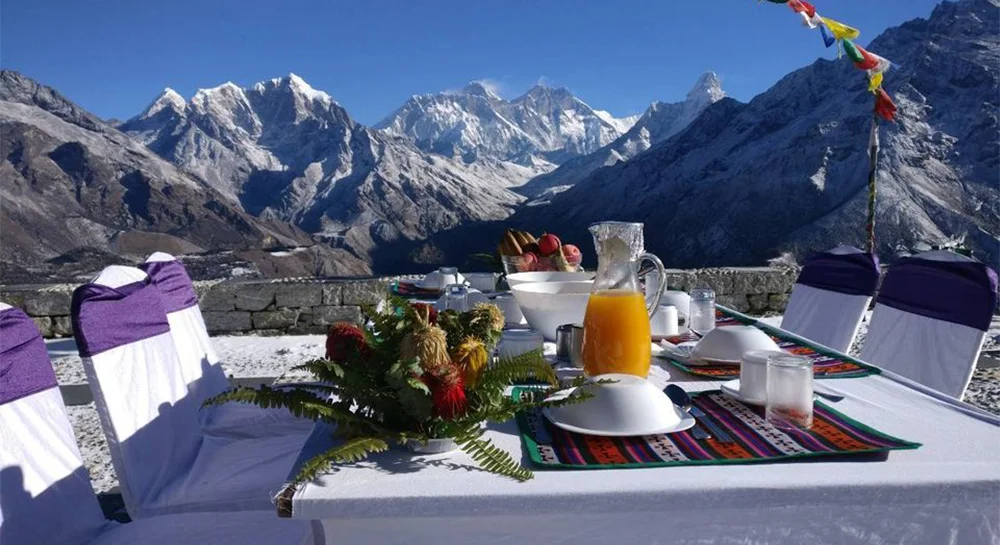


The Annapurna Circuit Trek Via Tilicho Lake is a wholesome trekking experience. This trek goes over the most iconic trails, landscapes, rice fields, banana plantations, orchards and high-altitude deserts, as well as for that of the modes of life and ethnic groups Gurungs, Thakalis, Tibetans, etc. The route has been popular with visitors to Nepal since trekking was first opened for foreigners in 1977.
Even though the Annapurna region offers other marvelous trips such as the Annapurna Base Camp Trek, Ghorepani Poon Hill Trek, Mardi Himal Trek, etc, the Annapurna Circuit Trek takes the crown jewel. The main highlight of the trek is a a continuous change of terrain every few days. In Nepal, changes in terrain corresponds to changes in the ethnicity and culture of people, vegetation and of course the landscape.
Annapurna Ciruit Trek is enriched with new moments such as the climb to the base camp of Pisang Peak, visits to the lost villages of Ghyaru and Ngawal, and the immersion around the turquoise glacial lake at the foot of Mount Tilicho (7,134 m) which optimizes the acclimatization to altitude before crossing the Thorong pass at 5,416 m. Plus, after you cross the Throung La, you will arrive at Mustang; the frontier of the Tibetan plateau in Nepal. The dry arid, almost moonscape like surrounding, of Mustang feels otherworldly. Another major attraction is Muktinath – a sacred pilgrimage for both Hindus & Buddhists temple that stand atop a hill with snow-capped mountains as it’s backdrop.
In the last leg of the trek, you drive along the Kali Gandaki River to Tatopani and continue the next day to the lake city of Pokhara. The idyllic city offers eateries, clubs, live music venues and gift shops to soothe your nerves after the rigorous Annapurna Circuit Trek. Keep Walking Nepal would like to invite you as our extended family on this wonderful trek.
Our representative will pick you up at Kathmandu International Airport and drive you to your hotel. Depending upon what time you arrive, you can enjoy a full day at leisure and join us on a welcome dinner with the KEEP WALKING FAMILY.
Look out for the KEEP WALKING NEPAL board behind the railing once you exit the airport terminal.
After breakfast we will experience the 2 most important sanctuaries of the Kathmandu Valley: Pashupatinath, Boudhanath and Swayambhunath.
Pashupatinath Temple
Pashupati is the most important Hindu site in Nepal. Dedicated to lord Shiva, the fierce god appears there in his benevolent aspect of Pashupati. A holy place often compared to Varanasi (in India), the last rites of Hindus are carried out on the banks of Bagmati river.
Boudhanath Stupa
Boudhanath is the largest Stupa in Asia. In the bygone days caravans after crossing the Himalayas arrived at the Stupa to thank lord Buddha when the trip went well. The eyes of the Buddha painted at the four cardinal points cast an observant gaze on men and their actions.
You will start early today for the beginning of the trek.
You will drive with your guide and trek crew to Besisahar after an early breakfast. The drive is scenic along the beautiful hills of Nepal. Exiting Kathmandu at the Nagdhunga checkpoint, you will drive on the Prithvi Highway to Dumre from whence you will follow the Marsyangdi River to Besisahar (760m), a small town which is the capital of Lamjung district. On clear days one can see Lamjung Himal from north of Besishahar.
The drive takes about 6 hours, and we have the rest of the day at leisure to explore the town.
The road from Besisahar to Chame is mostly off-road and bumpy but saves you from 3 days of hike on the dusty road.
The windy uphill road goes along the Marshyangdi river until you get to Chame. 2 hours into the drive you will reach Boong waterfall at Chyamche, a must stop for a great view with a hot drink in the opposite tea house.
The terrain and the ethnicity of the locals significantly change as you ascend further into the Marshyangdi river valley.
You will be rewarded with a stunning view of the towering Lamjung Himal (6893m) in the morning as you prepare for your actual first day of trek.
Views are plentiful today; snow-capped peaks stand tall above the rushing turquoise river while you are surrounded by pine forests. Furthermore, you will truly begin to appreciate how truly amazing how quickly the landscape changes with an increase in elevation.
Bhratang, a small village on the trail, is famous for its apples. The weather and soil are perfect for apple orchards even in frosty winters. As you leave the orchard village, the valley changes from a V-shape to a gentle U-shape while the Annapurna mountain range rears up.
You will keep on ascending along the Marshyangdi river to Dhukur Pokhari where one of the most iconic views awaits you; Paungda Danda a.k.a. Swarga Dwari (the gateway to heaven). The mountain’s smooth western face, also known as the Great Wall of Pisang, is composed of slate rock and formed as a result of an ancient lakebed being uplifted during the creation of the Himalayas. Locals believe that it is a gateway to heaven, where the souls will climb up to reach their final destination.
Moving on, you will cross a suspension bridge and gradually ascend to Upper Pisang. You can visit the newly built gompa and a 250-year-old gompa. The thin dry mountain air with superb mountain views, while refreshing, can leave you breathless at times.
Depending upon the weather, you will most probably wake up to a beautiful view of Lamjung Himal on the left and Tilicho Peak on the right and the Annapurna range farther below.
The region above Upper Pisang is dry as the monsoon clouds are cut off by the Annapurna Range. Also called Trans-Himalaya, the area receives almost no rain.
From Upper Pisang there are two trails, north and south of the Marsyangdi Khola, which meet up again at Mungji. You will take the northern trail for spectacular mountain views. The first stretch to Ghyaru is quite steep and draining but rewarding at the same time as the high mountains seem close. A beautiful lake on the trail is an added bonus.
From Ghyaru till Ngawal, the trail connects with the dirt road at times but the stretch isn’t too long. From Ngawal onward the landscape changes drastically with views of massive high rock formations and desert-like landscapes.
From Mungji, the trail continues past the picturesque but partially hidden village of Braga at 3475m to nearby Manang at 3500m.
Today we spend acclimatizing to get used to the altitude by visiting the Prakenn Gompa in the morning.
Prakenn Gompa (3945m) is hidden in the mountain wall and offers wonderful views of the village in the valley along with the Annapurna IV, Annapurna II, Gangapurna, and Tarke Kang as the backdrop.
Rest of the afternoon is at leisure. We suggest you visit the old city of Manang in the afternoon.
After breakfast in Manang, you and your rested muscles will begin your hike to Tilicho Lake Base Camp along the trail headed for Tilicho Lake. The path heads out of Manang through the western gates high above Margsyandi River through Khangsar Khola Valley with views of Annapurna II.
Once you cross the Khangsar Khola on the suspension bridge, you’ll ascend to the nice Tibetan-style village of Khangsar accompanied by magnificent views of the canyon and a rare view of the elusive Kang Guru peak.
After some tea, you’ll continue trekking along a wide new path until you get to Tare Gompa and climb towards a high ridge and ascend to another steep ridge. You’ll eventually reach a scenic valley and then cross a little stream putting you at Tilicho Base Camp.
Today, you’ll start with an early breakfast before a nice roundtrip loop to Tilicho Lake in the Manang district. It takes about 3 hours to get to this clear body of bright turquoise water, and one of the highest lakes in the world. You’ll hike through high alpine landscapes with plenty of snow-covered rocks—a striking contrast against the vibrant hue of the lake.
Have lunch and take your time to enjoy the lakeside surroundings before returning to base camp for the night.
After breakfast at base camp, you’ll follow a gently winding trail high above Khangsar village with more views of the Himalayan giants as you pass through juniper bushes and the ruins of old Khangsar. From here, follow an unmarked trail which leads you down to an old log bridge between Gumsang and Yak Kharka, an area where yak herders bring their animals to graze.
Today’s scenic trek starts with breakfast in Yak Kharka before you take a slow, gradual climb towards your overnight location. You’ll hike up a ridge and then descend to the Marsyangdi where you’ll cross the river on a covered wooden bridge that leads to a small tea shop.
After a short ascent up the mountain path on the right bank, you’ll follow a narrow trail and then trek down to Thorung Phedi. You can choose to spend your afternoon either hiking up to the lodge at High Camp for some acclimatization or rest at the tea house.
Today begins at sunrise as this is the longest and hardest day of the trek as you start off with a 4 hr ascend to Thorung-La pass at 5400 m. At the pass, you’ll be rewarded with spectacular views over Mustang and Kaligandaki valleys, the surrounding peaks, and a sweeping panorama of snow-capped mountains extending towards Tibet.
The descent is almost as demanding as the ascent, and you will stop for some tea en-route.
You will continue on a long, grassy slope through a series of switchbacks towards the lower Mustang and head back to the serene village of Muktinath. This important pilgrimage site for Buddhists and Hindus is surrounded by rugged mountains with unparalleled views of Dhaulagiri—the world’s 7th highest peak.
If you’ve skipped visiting the Muktinath temple yesterday, we suggest an early morning, pre-breakfast, visit to the temple. You can also visit the nearby Jwala Mai Temple where an eternal flame burns below the ground in the temple complex. It is believed that Jwala Mai Temple is the only place on earth to host all five elements; fire, water, sky, earth and air – the elements which make up all material things in the universe.
After the morning excursion, if you’ve gone for one, you will return back to the hotel for a hearty breakfast following which you will bid farewell to the mountains. Driving south on a scenic route along the Kali Gandaki river through the settlements of Jomsom, Marpha, Tukuche and quaint little villages you will eventually arrive at Tatopani. Along the way, Annpurna and Dhaulagiri will keep you company. You can stop and visit the apple orchards at Marpha and get to know more about the Thakali people indigenous to the region.
Tatopani literally translates to ‘hot water’ and the village is named so for its natural hot water spring. Locals and pilgrims visit the spring as it is said to prevent skin and bone diseases.
You will leave Tatopani after breakfast and drive west through lush landscapes and small villages while enjoying views of the Kali Gandaki River. Driving past the villages of Beni and the settlement of you will eventually arrive at Pokhara; the city of lakes.
The rest of the afternoon is at leisure. You can treat yourselves at the restaurants, cafes and spas available at the city.
You will catch an early afternoon flight to Kathmandu where you can rest at the hotel or go for some souvenir hunting.
In the evening, KWN family invites you for a farewell dinner celebrating your successful trek.
An office representative will drive you to the Kathmandu International Airport 3 hrs prior to the scheduled flight time.
This Itinerary can be changed by your group leader depending upon the client's fitness and weather conditions, your safety and staff safety is our primary concern.
| Start | Finish | Availability | Price | |
|---|---|---|---|---|
| Thursday 12/03/2026 | Friday 27/03/2026 | Trip Status available | Starting from $2700 | Book Now |
| Thursday 15/01/2026 | Thursday 30/04/2026 | Trip Status available | Starting from $2700 | Book Now |
| Sunday 03/05/2026 | Monday 18/05/2026 | Trip Status available | Starting from $2700 | Book Now |
| Sunday 02/08/2026 | Monday 17/08/2026 | Trip Status available | Starting from $2700 | Book Now |
| Sunday 13/09/2026 | Monday 28/09/2026 | Trip Status available | Starting from $2700 | Book Now |
| Thursday 08/10/2026 | Friday 23/10/2026 | Trip Status available | Starting from $2700 | Book Now |
| Sunday 01/11/2026 | Monday 16/11/2026 | Trip Status available | Starting from $2700 | Book Now |
| Saturday 19/12/2026 | Saturday 30/01/2027 | Trip Status available | Starting from $2700 | Book Now |
| Friday 12/03/2027 | Saturday 27/03/2027 | Trip Status available | Starting from $2700 | Book Now |
| Thursday 15/04/2027 | Friday 30/04/2027 | Trip Status available | Starting from $2700 | Book Now |
| Monday 03/05/2027 | Tuesday 18/05/2027 | Trip Status available | Starting from $2700 | Book Now |
| Monday 02/08/2027 | Tuesday 17/08/2027 | Trip Status available | Starting from $2700 | Book Now |
| Monday 13/09/2027 | Tuesday 28/09/2027 | Trip Status available | Starting from $2700 | Book Now |
| Friday 08/10/2027 | Saturday 23/10/2027 | Trip Status available | Starting from $2700 | Book Now |
| Monday 01/11/2027 | Tuesday 16/11/2027 | Trip Status available | Starting from $2700 | Book Now |
| Sunday 19/12/2027 | Monday 03/01/2028 | Trip Status available | Starting from $2700 | Book Now |
Here is a list of what you might want to pack for the hike. Please take this as a starting point. You’ll need layers of warmer clothing during the winter. We provide a 75 liter duffel bag for you to use for the trek. It will be given to you during your pre-trip meeting in Kathmandu. The duffle bag is yours to keep. Also, you can rent sleeping bag and down jacket with us at the additional fee of USD 35 for each once you are in Kathmandu.

Enter a recent customer’s contact info and we’ll ask them to leave you a review.
In April 2023, over 13 fantastic days, my two 15 year old sons and I (49 years old, mum) trekked from Lukla to Everest Base Camp with Keep Walking Nepal. This was our first holiday in Nepal. It was an
We had the most marvellous time with our guide Pratap venturing to EBC and back! We were well looked after and went at a great pace. We thoroughly enjoyed the hilarious banter with Pratap and the wisd
I did the Everest Base Camp Trek in November 2015 (the earliest trip advisor will let me go back is November 2017). This was a highly organized, safe and very enjoyable experience. My guide, Pratap, w
Spent time with Ang hiking through the Kumbhu Valley. Highly rate his service and experience. Already planning the next trip back to see him!
it was the best experience I’ve ever had . id like to thank Mr.Pratap who was our main guid for this trek. he is a really nice person and took care of me as well as my group , he was patient and had
It was very exciting moment with your team “Keep Walking Nepal”.
I have travelled twice With Keep Walking Nepal, and I have no doubt in recommanding these guys. My first KWN-trek was a trek from Phaplu to the Junbesi area. Our KWN-guide was like an eagle to monitor
Keep Walking Nepal provided an excellent guiding experience allowing our team of 3 to safely and affordably complete the three passes over 20 days. I can’t recommend these guys enough.
Trekking to Base Camp when you are 60 and you only like hiking sort day hikes was something I never thought I’d do but it was on my husband’s bucket list. We decided to make it a family affair. Th

We went with KWN for a 3-week trip to the 3 passes and Everest Base Camp in October 2017. To sum it up, we had an absolutely fantastic experience. Their organisation was flawless throughout – e.g. f
We had a wonderful time; they were extremely helpful and very well organised. Big thanks to Ang, Chopel and Mr Yum Yum
I did the Everest Circuit trek (Gokyo Lakes – Chola Pass – Kala Pittar / Everest Base Camp) with Ang Tshering Sherpa as my guide. It was my first trip overseas and one that I had been itching to d
We had a awesome trip, Pratap Gurung was our guide from Keep Walking and he was a fantastic guide super chilled out but always helpful and full of local knowledge. We did a hike up to Gokyo Ri and the
With extensive local knowledge and friendly, helpful service, I cannot recommend Keep Walking enough. They guided myself and my partner on both my first and second trip to Nepal, vesting Lang Tang Val
Keep Walking Nepal was highly recommended to me by a friend who went on a trek with the owner years ago, and I am so glad that we chose them as our trekking agency. The owner and staff are friendly, h
I would give 6 stars if I could. This trip was unbelievably fantastic, everything about it. WOW, WOW, WOW. A trip beyond expectations. The scenery, people, villages, culture, food – all totally capt
I am one of 8 Australian women who booked Ama Dablam base camp hike in mid 2017 and just completed the hike in early May 2018. I actually heard about Ang’s family many years ago from Keep Walking SA
From initial email contact prior to the trip, right through to ensuring that we had the best rooms available, our recent experience with Keep Walking Nepal was perfect from start to finish. Being 65+
The best trip I have done in Nepal. This journey had it all from jaw dropping scenery to amazing destinations. KEEP WALKING NEPAL organised a fantastic itinerary that suited all our needs. We were a m
I and my friend Jill signed up with Keep Walking Nepal to trek the Langtang Valley to the village of Langtang. It was an amazing experience. We had a guide Pratap who was very knowledgeable and always
Recently returned from a fantastic trek along the Everest Base Camp trail as far as Deboche, arranged by Ang Tshering Sherpa and Keep Walking Nepal. From the initial greeting at KTM airport through to
My nephew and I recently completed a one-week trek along the Everest Base Camp trail arranged by Keep Walking Nepal, and we couldn’t be more happy with our choice of trekking agency. As we only had
Keep Walking Nepal describes itself as a family business. It is.This is KWN’s strength. My daughter Bonnie and I had randomly chosen KWN for our 15 day Everest Region trek. At first, we had some dou
I trekked with Ang and team in the Everest Region and had the most amazing journey. (It was several years before March 2017, but that was the choice provided in the menu) We saw the beautiful sights a
Most incredible adventure with the most amazing guide Pratap Gurung and Som our porter. We spent 2 weeks trekking Gokyo lakes and it was everything i ever imagined it would be and more. This was thank
Trek with ang is always the best Had a wonderful time Thank you for your hospitality I will again visit Nepal ang
An absolutely amazing experience trekking through Nepal and made effortless through the exceptional organising of Keep Walking Nepal! Our Sherpa was extremely experienced and provided us with an amazi
This trip was the best one I had so far thanked you so much for your kind hospitality loved the trek Keep going until next time.
Another great trip with this company, Ang always delivers for us, and we are never disappointed. Gokyo lakes is a great location to trek to, we have done it twice last time in 2010. Thank you to Ang a
Keep Walking Nepal describes itself as a family business. It is.This is KWN’s strength. My daughter Bonnie and I had randomly chosen KWN for our 15 day Everest Region trek. At first, we had some dou
In April 2023, over 13 fantastic days, my two 15 year old sons and I (49 years old, mum) trekked from Lukla to Everest Base Camp with Keep Walking Nepal. This was our first holiday in Nepal. It was an
We had the most marvellous time with our guide Pratap venturing to EBC and back! We were well looked after and went at a great pace. We thoroughly enjoyed the hilarious banter with Pratap and the wisd
I did the Everest Base Camp Trek in November 2015 (the earliest trip advisor will let me go back is November 2017). This was a highly organized, safe and very enjoyable experience. My guide, Pratap, w
Spent time with Ang hiking through the Kumbhu Valley. Highly rate his service and experience. Already planning the next trip back to see him!
it was the best experience I’ve ever had . id like to thank Mr.Pratap who was our main guid for this trek. he is a really nice person and took care of me as well as my group , he was patient and had
It was very exciting moment with your team “Keep Walking Nepal”.
I have travelled twice With Keep Walking Nepal, and I have no doubt in recommanding these guys. My first KWN-trek was a trek from Phaplu to the Junbesi area. Our KWN-guide was like an eagle to monitor
Keep Walking Nepal provided an excellent guiding experience allowing our team of 3 to safely and affordably complete the three passes over 20 days. I can’t recommend these guys enough.
Trekking to Base Camp when you are 60 and you only like hiking sort day hikes was something I never thought I’d do but it was on my husband’s bucket list. We decided to make it a family affair. Th
We went with KWN for a 3-week trip to the 3 passes and Everest Base Camp in October 2017. To sum it up, we had an absolutely fantastic experience. Their organisation was flawless throughout – e.g. f
We had a wonderful time; they were extremely helpful and very well organised. Big thanks to Ang, Chopel and Mr Yum Yum
I did the Everest Circuit trek (Gokyo Lakes – Chola Pass – Kala Pittar / Everest Base Camp) with Ang Tshering Sherpa as my guide. It was my first trip overseas and one that I had been itching to d
We had a awesome trip, Pratap Gurung was our guide from Keep Walking and he was a fantastic guide super chilled out but always helpful and full of local knowledge. We did a hike up to Gokyo Ri and the
With extensive local knowledge and friendly, helpful service, I cannot recommend Keep Walking enough. They guided myself and my partner on both my first and second trip to Nepal, vesting Lang Tang Val
Keep Walking Nepal was highly recommended to me by a friend who went on a trek with the owner years ago, and I am so glad that we chose them as our trekking agency. The owner and staff are friendly, h
I would give 6 stars if I could. This trip was unbelievably fantastic, everything about it. WOW, WOW, WOW. A trip beyond expectations. The scenery, people, villages, culture, food – all totally capt
I am one of 8 Australian women who booked Ama Dablam base camp hike in mid 2017 and just completed the hike in early May 2018. I actually heard about Ang’s family many years ago from Keep Walking SA
From initial email contact prior to the trip, right through to ensuring that we had the best rooms available, our recent experience with Keep Walking Nepal was perfect from start to finish. Being 65+
The best trip I have done in Nepal. This journey had it all from jaw dropping scenery to amazing destinations. KEEP WALKING NEPAL organised a fantastic itinerary that suited all our needs. We were a m
I and my friend Jill signed up with Keep Walking Nepal to trek the Langtang Valley to the village of Langtang. It was an amazing experience. We had a guide Pratap who was very knowledgeable and always
Recently returned from a fantastic trek along the Everest Base Camp trail as far as Deboche, arranged by Ang Tshering Sherpa and Keep Walking Nepal. From the initial greeting at KTM airport through to
My nephew and I recently completed a one-week trek along the Everest Base Camp trail arranged by Keep Walking Nepal, and we couldn’t be more happy with our choice of trekking agency. As we only had
We have not long returned from a trek to Lo Mantang with Keep Walking Nepal. It wasn’t our first trip with Ang’s team & we never hesitate to use them for a special experience trekking. Our gui
Keep Walking Nepal describes itself as a family business. It is.This is KWN’s strength. My daughter Bonnie and I had randomly chosen KWN for our 15 day Everest Region trek. At first, we had some dou
I trekked with Ang and team in the Everest Region and had the most amazing journey. (It was several years before March 2017, but that was the choice provided in the menu) We saw the beautiful sights a
Most incredible adventure with the most amazing guide Pratap Gurung and Som our porter. We spent 2 weeks trekking Gokyo lakes and it was everything i ever imagined it would be and more. This was thank
Trek with ang is always the best Had a wonderful time Thank you for your hospitality I will again visit Nepal ang
An absolutely amazing experience trekking through Nepal and made effortless through the exceptional organising of Keep Walking Nepal! Our Sherpa was extremely experienced and provided us with an amazi
This trip was the best one I had so far thanked you so much for your kind hospitality loved the trek Keep going until next time.
Another great trip with this company, Ang always delivers for us, and we are never disappointed. Gokyo lakes is a great location to trek to, we have done it twice last time in 2010. Thank you to Ang a
Keep Walking Nepal describes itself as a family business. It is.This is KWN’s strength. My daughter Bonnie and I had randomly chosen KWN for our 15 day Everest Region trek. At first, we had some dou
In April 2023, over 13 fantastic days, my two 15 year old sons and I (49 years old, mum) trekked from Lukla to Everest Base Camp with Keep Walking Nepal. This was our first holiday in Nepal. It was an
We had the most marvellous time with our guide Pratap venturing to EBC and back! We were well looked after and went at a great pace. We thoroughly enjoyed the hilarious banter with Pratap and the wisd
I did the Everest Base Camp Trek in November 2015 (the earliest trip advisor will let me go back is November 2017). This was a highly organized, safe and very enjoyable experience. My guide, Pratap, w
Spent time with Ang hiking through the Kumbhu Valley. Highly rate his service and experience. Already planning the next trip back to see him!
it was the best experience I’ve ever had . id like to thank Mr.Pratap who was our main guid for this trek. he is a really nice person and took care of me as well as my group , he was patient and had
It was very exciting moment with your team “Keep Walking Nepal”.
I have travelled twice With Keep Walking Nepal, and I have no doubt in recommanding these guys. My first KWN-trek was a trek from Phaplu to the Junbesi area. Our KWN-guide was like an eagle to monitor
Keep Walking Nepal provided an excellent guiding experience allowing our team of 3 to safely and affordably complete the three passes over 20 days. I can’t recommend these guys enough.
Trekking to Base Camp when you are 60 and you only like hiking sort day hikes was something I never thought I’d do but it was on my husband’s bucket list. We decided to make it a family affair. Th
We went with KWN for a 3-week trip to the 3 passes and Everest Base Camp in October 2017. To sum it up, we had an absolutely fantastic experience. Their organisation was flawless throughout – e.g. f
We had a wonderful time; they were extremely helpful and very well organised. Big thanks to Ang, Chopel and Mr Yum Yum
I did the Everest Circuit trek (Gokyo Lakes – Chola Pass – Kala Pittar / Everest Base Camp) with Ang Tshering Sherpa as my guide. It was my first trip overseas and one that I had been itching to d
We had a awesome trip, Pratap Gurung was our guide from Keep Walking and he was a fantastic guide super chilled out but always helpful and full of local knowledge. We did a hike up to Gokyo Ri and the
With extensive local knowledge and friendly, helpful service, I cannot recommend Keep Walking enough. They guided myself and my partner on both my first and second trip to Nepal, vesting Lang Tang Val
Keep Walking Nepal was highly recommended to me by a friend who went on a trek with the owner years ago, and I am so glad that we chose them as our trekking agency. The owner and staff are friendly, h
I would give 6 stars if I could. This trip was unbelievably fantastic, everything about it. WOW, WOW, WOW. A trip beyond expectations. The scenery, people, villages, culture, food – all totally capt
I am one of 8 Australian women who booked Ama Dablam base camp hike in mid 2017 and just completed the hike in early May 2018. I actually heard about Ang’s family many years ago from Keep Walking SA
From initial email contact prior to the trip, right through to ensuring that we had the best rooms available, our recent experience with Keep Walking Nepal was perfect from start to finish. Being 65+
The best trip I have done in Nepal. This journey had it all from jaw dropping scenery to amazing destinations. KEEP WALKING NEPAL organised a fantastic itinerary that suited all our needs. We were a m
I and my friend Jill signed up with Keep Walking Nepal to trek the Langtang Valley to the village of Langtang. It was an amazing experience. We had a guide Pratap who was very knowledgeable and always
Recently returned from a fantastic trek along the Everest Base Camp trail as far as Deboche, arranged by Ang Tshering Sherpa and Keep Walking Nepal. From the initial greeting at KTM airport through to
My nephew and I recently completed a one-week trek along the Everest Base Camp trail arranged by Keep Walking Nepal, and we couldn’t be more happy with our choice of trekking agency. As we only had
We have not long returned from a trek to Lo Mantang with Keep Walking Nepal. It wasn’t our first trip with Ang’s team & we never hesitate to use them for a special experience trekking. Our gui
Keep Walking Nepal describes itself as a family business. It is.This is KWN’s strength. My daughter Bonnie and I had randomly chosen KWN for our 15 day Everest Region trek. At first, we had some dou
I trekked with Ang and team in the Everest Region and had the most amazing journey. (It was several years before March 2017, but that was the choice provided in the menu) We saw the beautiful sights a
Most incredible adventure with the most amazing guide Pratap Gurung and Som our porter. We spent 2 weeks trekking Gokyo lakes and it was everything i ever imagined it would be and more. This was thank
Trek with ang is always the best Had a wonderful time Thank you for your hospitality I will again visit Nepal ang
An absolutely amazing experience trekking through Nepal and made effortless through the exceptional organising of Keep Walking Nepal! Our Sherpa was extremely experienced and provided us with an amazi
This trip was the best one I had so far thanked you so much for your kind hospitality loved the trek Keep going until next time.
Another great trip with this company, Ang always delivers for us, and we are never disappointed. Gokyo lakes is a great location to trek to, we have done it twice last time in 2010. Thank you to Ang a
Keep Walking Nepal describes itself as a family business. It is.This is KWN’s strength. My daughter Bonnie and I had randomly chosen KWN for our 15 day Everest Region trek. At first, we had some dou
