


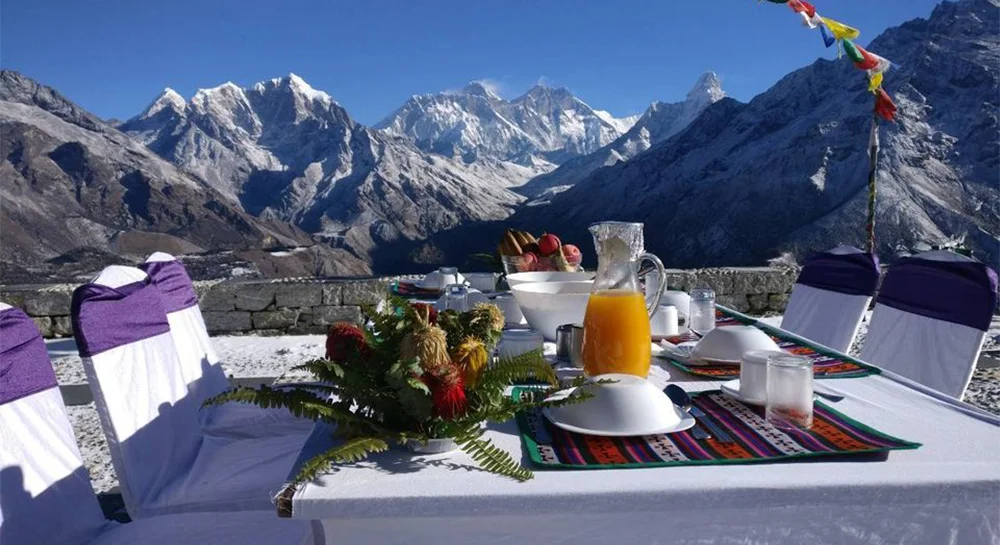


Our Lower Mustang Trek takes you through the Kali Gandaki gorge into the heart of the Thakali culture and further to the famous Muktinath Temple. The gorge is carved by the Kali Gandaki River which originates in the Tibetan Plateau and eventually flows into the Ganges in India. The region falls under the rain shadow of the Greater Himalayas and the climate. Hence, the landscape is similar to the Tibetan Plateau; cold and dry. During this trip, you get to visit the historic village of Kagbeni before reaching the sacred temple town of Muktinath.
The lower Mustang trek starts with an early morning scenic flight over the mountains into Jomsom. Jomsom is a touristy town of sorts and functions as the administrative center for the Mustang District. It is also the gateway to Upper Mustang, Kagbeni and Muktinath.
Kagbeni is more like Tibet with its magnificent monastery and narrow alleys frequented by frail old ladies murmuring with their prayer beads. It’s almost medieval to an extent and the way of life is simple. The village was originally designed as a fortress town. It was also an important hub for the Nepal-Tibet ‘salt trade’. For those eyeing the Annapurna Circuit, Thorong La is visible from the rooftops of the village. At 5400m, it is the highest pass in the world.
The Muktinath temple (3,755m) is situated further up the valley at the base of the Thorong La pass. The temple is a pilgrimage destination for both Hindus and Buddhists. that devotees flock to. The outer courtyard of the temple has 108 bull-shaped stone water faucets. In Hindu astrology, there are 12 zodiacs (Rashi) and 9 planets (Graha) giving a total of 108 combinations. At the same time, the temple is one of the 24 celebrated Buddhist Tantric places.
The lower Mustang trek also includes many side trips. Some key places of interest are the 800-year-old nunnery at Tiri and the village of Lupra. Lupra has the only Bon Gompa in the Annapurna area. The Bon religion predates Buddhism. Above Lupra Shaligrams, a.k.a black ammonite fossils are plenty on the Kali Gandaki riverbed. Shaligrams are quintessential for the establishment of a Vishnu temple anywhere in the world.
The most suitable time to visit Kagbeni and Muktinath is from March to October. From November till February, it’s cold. Keep Walking Nepal has been running trips to Kagbeni and Muktinath for the last 15 years. As such, we would be happy to introduce you to our way of life while you travel as part of my extended family.
Upon arrival at Tribhuvan International Airport in Kathmandu, you will received by Keep Walking Nepal’s representative and driven to your hotel. Please look for Keep Walking Nepal’s board at the opposite of the arrival gate.
In the morning, you will take a scenic flight to Pokhara. On your 25 minutes flight to Pokhara, you get an aerial view of the beautiful lakes, the green forests, and also the snowy mountains.
After check-in at the hotel and some rest, you will embark on a guided tour of Pokhara Valley. Some of the city’s finest attractions on this half-day Pokhara tour include Devi’s Fall, Gupteshor Mahadev, Mahendra Cave, Bat Cave (Chamero Gupha), Peace Stupa, Tibetan Camp, Seti River George.
In the evening you will be free to enjoy the sight and sounds of the many hotels and pubs by the lakeside.
Departing on an early flight from Pokhara, you will fly to Jomsom. This 25min flight is along one of the most stunning valleys in Nepal. Jomsom Or Dzongsam meaning New Fort is the region’s administrative headquarters and the main travel hub for Upper Mustang and Muktinath. Situated at 2700m, the Kali Gandaki River flows through the town. There is plenty of accommodation and good food available in Jomsom.
The houses in the villages in this area are designed to protect the inhabitants from the strong winds that blow up the valley every day from late morning onwards. These winds are caused by the differences in atmospheric pressure between the Tibetan Plateau and the lower reaches of the valley. Therefore flights are prevented from taking off from Jomsom after 11 am.
Following a hearty breakfast in Jomsom, you will board our private jeep and travel to Kagbeni. The village is designed as a fortress town and was quite important during the “salt trade” between Tibet and Nepal. Kagbeni retains a medieval feel with narrow, covered flagstone alleys, antique Chortens and large ochre monastery perched about the town. It lies on the confluence of the Kali Gandaki and Jhong Rivers. It is a fascinating village with closely packed mud-brick houses and well worth taking the time to explore after lunch. The Thorong Las pass can be seen from the rooftops, and at 5400m it is the highest pass in the world.
After breakfast, there is an optional walking side trip to Tiri. This trip takes you into Upper Mustang (note since 2007 permits are not required to visit Tiri). It is approximately a 40min walk and home to an 800- year-old nunnery.
From Kagbeni you will cross the Kali Gandaki River on the bridge (opposite the Pilgrim Guesthouse) and head north. The trail improves after the avalanche scree just beyond the bridge. This is the summer route upriver taken only when the river is too high to ford. At other times it is possible to ford the river just down from the police checkpoint. After returning to Kagbeni you will travel by jeep to Muktinath, stopping at Jharkot for morning tea, and drive further to Muktinath.
Muktinath is an ancient sacred place for both Hindus and Buddhists. The Hindus know it as Chumig Gyatsa – “Place of Salvation”. It is one of the most ancient temples of the God Vishnu. Buddhists call Muktinath Chumming Gyasta, which in Tibetan means “Hundred Waters”. It is a sacred place of the Dakinis goddesses known as “Sky Dancers”, and is also one of the 24 celebrated Tantric places. It is situated at an altitude of 3710m at the base of the Thorong La mountain pass in the Mustang district. It is approx. 18kms NE from Jomsom. After lunch, you will visit the temple complex.
In early September there is the annual horse race known as Yartung. A week of serious horse racing Tibetan style.
In the morning we will pack up the jeep but if you want want to stretch your legs, you can walk down to Jharkot, enjoying the beautiful scenery back down the valley.
A quick cuppa and you will drive down to the trail exit point & walk further to Lupra (approx. 2.5hrs). When walking to Lupra, at the base of the river before crossing to the Lupra side, is a cave approximately 50m up. This cave is used for long-term meditation ranging from 30 days to 6 months. There is a balcony with a seating area for meditation, a small cooking area and sleeping quarters.
In Lupra you will find the only Bon Gompa of the Annapurna region. The Bon religion predates Buddhism. If the temple is locked ask one of the villagers if they will open it for viewing. The old Bon religion comes from Tibet and influenced a lot of the Tibetan way of Buddhism. Bon turn their prayer wheels anticlockwise and walk around the stupa anticlockwise.
Above Lupra there is a good variety of rocks with Shaligrams (black ammonite fossils). These stones are used in the establishment of a temple of Vishnu anywhere in the world.
You will start the day with a 40min walk along the river back to Eklaibhatti. It is an opportunity to pick over the interesting rocks that can be found along the riverbed.
At Eklaibhatti you have the option of crossing the long suspension bridge over the Kali Gandaki River and visiting the Raja Picnic Ground. The route trails west to Pilling a lovely agricultural village with traditional flat roofs and white prayer flags. At onto Palak, you can rest outside of the lovely Gompa painted with lions or conch shells.
You will walk further onto Dhakarjhong, walking along the waterway to the Rajas Picnic Grounds. Taking the upper path (rather than descending to the new jeep path) and walking for 20 mins through beautiful alpine flowers. Walking steadily uphill you will arrive to a sheer cliff with silk kharta scarves in a tree.
From here 15mins further on is a Chorten and stairs up to a cave. Inside the cave are pictures of the Dalai Lama and others. On the weekends the caves can be filled with picnickers. From the cave, you can see huge waterfalls high up on the steep rock faces. Down the valley are views of Niligiri. The scramble back down takes 1hr to Dhakarjhong. You will then walk back to Eklaibhatti and drive onward to Jomsom.
An alternative option is to walk from Lupra to Jomsom or travel by jeep, spending the rest of the day in Jomsom at leisure.
Early in the morning you will fly back to Pokhara where you have rest of the day at leisure.
You can visit one of the many gift shops, cafes or massage parlors.
After breakfast you will continue onward towards the next leg of your journey at Chitwan.
The landscape and culture are totally different from that which you have experienced so far and from the high, alpine regions of the Himalayan range. The name the ‘Terai’ refers to the extensive plains in the southern part of Nepal — this area is the most northern extension of the great Gangetic plains of India, land that was won and lost in decades of struggle and shares both Indian and Nepali characteristics and culture.
You will drive through narrow winding gorges and deep river valleys past terraced fields tilled by generations of family members; you’ll ultimately reach the vast plains and vibrant jungle of the Chitwan National Park in time for a late lunch. This is a stunning overland journey, and you will be able to relax and take in the incredible views of this diverse country from the car.
You’ll arrive in Chitwan in the early afternoon where you will be briefed by our nature guide about the upcoming day’s program. In the evening there will be a Tharu stick dance program (depends upon availability).
After an early morning refreshment, you will canoe on the river for an excellent birdwatching program, followed by breakfast. After rest, you can either join the Elephant Back Safari or Jeep Safari (you will have to confirm for jeep safari the previous day), a trip to the Elephant Breeding Center, elephant bathing and a jungle walk.
You will drive back to Kathmandu along the Mahendra Highway.
In the evening, we enjoy a farewell dinner organized by Keep Walking Nepal to celebrate a successful trip.
You will start a little early to beat the rush hour traffic and drive to Pashupatinath, one of the UNESCO world heritage site and one of the holiest pilgrimage stop for Hindus all over the world. Only Hindus are allowed in the main temple complex while foreigners are permitted to visit the temples outside and even view the cremation ritual, which unlike in the west is publicly performed.
You will then drive to Boudha, another UNESCO site and a pilgrimage stop for Buddhists.
Boudhanath Stupa is surrounded by eateries, shops selling all kind of goods and monasteries housing monks and students studying Buddhism. There are usually devout pilgrims circumambulating the main stupa while some do so by lying flat on the ground.
You can relax and soak all the unique yet mystifying ways of the people and even enjoy lunch in one of the rooftop eateries surrounding the Boudhanath Stupa.
After driving back to the hotel, you can retreat or explore at your own convenience (Swayambhu is best to explore in the evening).
Our office representative or your trek guide will drop you off at the port of exit per the required time.
| Start | Finish | Availability | Price | |
|---|---|---|---|---|
| Sunday 22/03/2026 | Thursday 02/04/2026 | Trip Status available | Starting from $2955 | Book Now |
| Thursday 16/04/2026 | Monday 27/04/2026 | Trip Status available | Starting from $2955 | Book Now |
| Sunday 03/05/2026 | Thursday 14/05/2026 | Trip Status available | Starting from $2955 | Book Now |
| Sunday 07/06/2026 | Sunday 28/06/2026 | Trip Status available | Starting from $2955 | Book Now |
| Sunday 12/07/2026 | Thursday 23/07/2026 | Trip Status available | Starting from $2955 | Book Now |
| Monday 22/03/2027 | Friday 02/04/2027 | Trip Status available | Starting from $2955 | Book Now |
| Friday 16/04/2027 | Tuesday 27/04/2027 | Trip Status available | Starting from $2955 | Book Now |
| Monday 03/05/2027 | Friday 14/05/2027 | Trip Status available | Starting from $2955 | Book Now |
| Monday 07/06/2027 | Monday 28/06/2027 | Trip Status available | Starting from $2955 | Book Now |
| Monday 12/07/2027 | Friday 23/07/2027 | Trip Status available | Starting from $2955 | Book Now |
Here is a list of what you might want to pack for the hike. Please take this as a starting point. You’ll need layers of warmer clothing during the winter. We provide a 75 liter duffel bag for you to use for the trek. It will be given to you during your pre-trip meeting in Kathmandu. The duffle bag is yours to keep. Also, you can rent sleeping bag and down jacket with us at the additional fee of USD 35 for each once you are in Kathmandu.
Enter a recent customer’s contact info and we’ll ask them to leave you a review.
In April 2023, over 13 fantastic days, my two 15 year old sons and I (49 years old, mum) trekked from Lukla to Everest Base Camp with Keep Walking Nepal. This was our first holiday in Nepal. It was an
We had the most marvellous time with our guide Pratap venturing to EBC and back! We were well looked after and went at a great pace. We thoroughly enjoyed the hilarious banter with Pratap and the wisd
I did the Everest Base Camp Trek in November 2015 (the earliest trip advisor will let me go back is November 2017). This was a highly organized, safe and very enjoyable experience. My guide, Pratap, w
Spent time with Ang hiking through the Kumbhu Valley. Highly rate his service and experience. Already planning the next trip back to see him!
it was the best experience I’ve ever had . id like to thank Mr.Pratap who was our main guid for this trek. he is a really nice person and took care of me as well as my group , he was patient and had
It was very exciting moment with your team “Keep Walking Nepal”.
I have travelled twice With Keep Walking Nepal, and I have no doubt in recommanding these guys. My first KWN-trek was a trek from Phaplu to the Junbesi area. Our KWN-guide was like an eagle to monitor
Keep Walking Nepal provided an excellent guiding experience allowing our team of 3 to safely and affordably complete the three passes over 20 days. I can’t recommend these guys enough.
Trekking to Base Camp when you are 60 and you only like hiking sort day hikes was something I never thought I’d do but it was on my husband’s bucket list. We decided to make it a family affair. Th

We went with KWN for a 3-week trip to the 3 passes and Everest Base Camp in October 2017. To sum it up, we had an absolutely fantastic experience. Their organisation was flawless throughout – e.g. f
We had a wonderful time; they were extremely helpful and very well organised. Big thanks to Ang, Chopel and Mr Yum Yum
I did the Everest Circuit trek (Gokyo Lakes – Chola Pass – Kala Pittar / Everest Base Camp) with Ang Tshering Sherpa as my guide. It was my first trip overseas and one that I had been itching to d
We had a awesome trip, Pratap Gurung was our guide from Keep Walking and he was a fantastic guide super chilled out but always helpful and full of local knowledge. We did a hike up to Gokyo Ri and the
With extensive local knowledge and friendly, helpful service, I cannot recommend Keep Walking enough. They guided myself and my partner on both my first and second trip to Nepal, vesting Lang Tang Val
Keep Walking Nepal was highly recommended to me by a friend who went on a trek with the owner years ago, and I am so glad that we chose them as our trekking agency. The owner and staff are friendly, h
I would give 6 stars if I could. This trip was unbelievably fantastic, everything about it. WOW, WOW, WOW. A trip beyond expectations. The scenery, people, villages, culture, food – all totally capt
I am one of 8 Australian women who booked Ama Dablam base camp hike in mid 2017 and just completed the hike in early May 2018. I actually heard about Ang’s family many years ago from Keep Walking SA
From initial email contact prior to the trip, right through to ensuring that we had the best rooms available, our recent experience with Keep Walking Nepal was perfect from start to finish. Being 65+
The best trip I have done in Nepal. This journey had it all from jaw dropping scenery to amazing destinations. KEEP WALKING NEPAL organised a fantastic itinerary that suited all our needs. We were a m
I and my friend Jill signed up with Keep Walking Nepal to trek the Langtang Valley to the village of Langtang. It was an amazing experience. We had a guide Pratap who was very knowledgeable and always
Recently returned from a fantastic trek along the Everest Base Camp trail as far as Deboche, arranged by Ang Tshering Sherpa and Keep Walking Nepal. From the initial greeting at KTM airport through to
My nephew and I recently completed a one-week trek along the Everest Base Camp trail arranged by Keep Walking Nepal, and we couldn’t be more happy with our choice of trekking agency. As we only had
Keep Walking Nepal describes itself as a family business. It is.This is KWN’s strength. My daughter Bonnie and I had randomly chosen KWN for our 15 day Everest Region trek. At first, we had some dou
I trekked with Ang and team in the Everest Region and had the most amazing journey. (It was several years before March 2017, but that was the choice provided in the menu) We saw the beautiful sights a
Most incredible adventure with the most amazing guide Pratap Gurung and Som our porter. We spent 2 weeks trekking Gokyo lakes and it was everything i ever imagined it would be and more. This was thank
Trek with ang is always the best Had a wonderful time Thank you for your hospitality I will again visit Nepal ang
An absolutely amazing experience trekking through Nepal and made effortless through the exceptional organising of Keep Walking Nepal! Our Sherpa was extremely experienced and provided us with an amazi
This trip was the best one I had so far thanked you so much for your kind hospitality loved the trek Keep going until next time.
Another great trip with this company, Ang always delivers for us, and we are never disappointed. Gokyo lakes is a great location to trek to, we have done it twice last time in 2010. Thank you to Ang a
Keep Walking Nepal describes itself as a family business. It is.This is KWN’s strength. My daughter Bonnie and I had randomly chosen KWN for our 15 day Everest Region trek. At first, we had some dou
In April 2023, over 13 fantastic days, my two 15 year old sons and I (49 years old, mum) trekked from Lukla to Everest Base Camp with Keep Walking Nepal. This was our first holiday in Nepal. It was an
We had the most marvellous time with our guide Pratap venturing to EBC and back! We were well looked after and went at a great pace. We thoroughly enjoyed the hilarious banter with Pratap and the wisd
I did the Everest Base Camp Trek in November 2015 (the earliest trip advisor will let me go back is November 2017). This was a highly organized, safe and very enjoyable experience. My guide, Pratap, w
Spent time with Ang hiking through the Kumbhu Valley. Highly rate his service and experience. Already planning the next trip back to see him!
it was the best experience I’ve ever had . id like to thank Mr.Pratap who was our main guid for this trek. he is a really nice person and took care of me as well as my group , he was patient and had
It was very exciting moment with your team “Keep Walking Nepal”.
I have travelled twice With Keep Walking Nepal, and I have no doubt in recommanding these guys. My first KWN-trek was a trek from Phaplu to the Junbesi area. Our KWN-guide was like an eagle to monitor
Keep Walking Nepal provided an excellent guiding experience allowing our team of 3 to safely and affordably complete the three passes over 20 days. I can’t recommend these guys enough.
Trekking to Base Camp when you are 60 and you only like hiking sort day hikes was something I never thought I’d do but it was on my husband’s bucket list. We decided to make it a family affair. Th
We went with KWN for a 3-week trip to the 3 passes and Everest Base Camp in October 2017. To sum it up, we had an absolutely fantastic experience. Their organisation was flawless throughout – e.g. f
We had a wonderful time; they were extremely helpful and very well organised. Big thanks to Ang, Chopel and Mr Yum Yum
I did the Everest Circuit trek (Gokyo Lakes – Chola Pass – Kala Pittar / Everest Base Camp) with Ang Tshering Sherpa as my guide. It was my first trip overseas and one that I had been itching to d
We had a awesome trip, Pratap Gurung was our guide from Keep Walking and he was a fantastic guide super chilled out but always helpful and full of local knowledge. We did a hike up to Gokyo Ri and the
With extensive local knowledge and friendly, helpful service, I cannot recommend Keep Walking enough. They guided myself and my partner on both my first and second trip to Nepal, vesting Lang Tang Val
Keep Walking Nepal was highly recommended to me by a friend who went on a trek with the owner years ago, and I am so glad that we chose them as our trekking agency. The owner and staff are friendly, h
I would give 6 stars if I could. This trip was unbelievably fantastic, everything about it. WOW, WOW, WOW. A trip beyond expectations. The scenery, people, villages, culture, food – all totally capt
I am one of 8 Australian women who booked Ama Dablam base camp hike in mid 2017 and just completed the hike in early May 2018. I actually heard about Ang’s family many years ago from Keep Walking SA
From initial email contact prior to the trip, right through to ensuring that we had the best rooms available, our recent experience with Keep Walking Nepal was perfect from start to finish. Being 65+
The best trip I have done in Nepal. This journey had it all from jaw dropping scenery to amazing destinations. KEEP WALKING NEPAL organised a fantastic itinerary that suited all our needs. We were a m
I and my friend Jill signed up with Keep Walking Nepal to trek the Langtang Valley to the village of Langtang. It was an amazing experience. We had a guide Pratap who was very knowledgeable and always
Recently returned from a fantastic trek along the Everest Base Camp trail as far as Deboche, arranged by Ang Tshering Sherpa and Keep Walking Nepal. From the initial greeting at KTM airport through to
My nephew and I recently completed a one-week trek along the Everest Base Camp trail arranged by Keep Walking Nepal, and we couldn’t be more happy with our choice of trekking agency. As we only had
We have not long returned from a trek to Lo Mantang with Keep Walking Nepal. It wasn’t our first trip with Ang’s team & we never hesitate to use them for a special experience trekking. Our gui
Keep Walking Nepal describes itself as a family business. It is.This is KWN’s strength. My daughter Bonnie and I had randomly chosen KWN for our 15 day Everest Region trek. At first, we had some dou
I trekked with Ang and team in the Everest Region and had the most amazing journey. (It was several years before March 2017, but that was the choice provided in the menu) We saw the beautiful sights a
Most incredible adventure with the most amazing guide Pratap Gurung and Som our porter. We spent 2 weeks trekking Gokyo lakes and it was everything i ever imagined it would be and more. This was thank
Trek with ang is always the best Had a wonderful time Thank you for your hospitality I will again visit Nepal ang
An absolutely amazing experience trekking through Nepal and made effortless through the exceptional organising of Keep Walking Nepal! Our Sherpa was extremely experienced and provided us with an amazi
This trip was the best one I had so far thanked you so much for your kind hospitality loved the trek Keep going until next time.
Another great trip with this company, Ang always delivers for us, and we are never disappointed. Gokyo lakes is a great location to trek to, we have done it twice last time in 2010. Thank you to Ang a
Keep Walking Nepal describes itself as a family business. It is.This is KWN’s strength. My daughter Bonnie and I had randomly chosen KWN for our 15 day Everest Region trek. At first, we had some dou
In April 2023, over 13 fantastic days, my two 15 year old sons and I (49 years old, mum) trekked from Lukla to Everest Base Camp with Keep Walking Nepal. This was our first holiday in Nepal. It was an
We had the most marvellous time with our guide Pratap venturing to EBC and back! We were well looked after and went at a great pace. We thoroughly enjoyed the hilarious banter with Pratap and the wisd
I did the Everest Base Camp Trek in November 2015 (the earliest trip advisor will let me go back is November 2017). This was a highly organized, safe and very enjoyable experience. My guide, Pratap, w
Spent time with Ang hiking through the Kumbhu Valley. Highly rate his service and experience. Already planning the next trip back to see him!
it was the best experience I’ve ever had . id like to thank Mr.Pratap who was our main guid for this trek. he is a really nice person and took care of me as well as my group , he was patient and had
It was very exciting moment with your team “Keep Walking Nepal”.
I have travelled twice With Keep Walking Nepal, and I have no doubt in recommanding these guys. My first KWN-trek was a trek from Phaplu to the Junbesi area. Our KWN-guide was like an eagle to monitor
Keep Walking Nepal provided an excellent guiding experience allowing our team of 3 to safely and affordably complete the three passes over 20 days. I can’t recommend these guys enough.
Trekking to Base Camp when you are 60 and you only like hiking sort day hikes was something I never thought I’d do but it was on my husband’s bucket list. We decided to make it a family affair. Th
We went with KWN for a 3-week trip to the 3 passes and Everest Base Camp in October 2017. To sum it up, we had an absolutely fantastic experience. Their organisation was flawless throughout – e.g. f
We had a wonderful time; they were extremely helpful and very well organised. Big thanks to Ang, Chopel and Mr Yum Yum
I did the Everest Circuit trek (Gokyo Lakes – Chola Pass – Kala Pittar / Everest Base Camp) with Ang Tshering Sherpa as my guide. It was my first trip overseas and one that I had been itching to d
We had a awesome trip, Pratap Gurung was our guide from Keep Walking and he was a fantastic guide super chilled out but always helpful and full of local knowledge. We did a hike up to Gokyo Ri and the
With extensive local knowledge and friendly, helpful service, I cannot recommend Keep Walking enough. They guided myself and my partner on both my first and second trip to Nepal, vesting Lang Tang Val
Keep Walking Nepal was highly recommended to me by a friend who went on a trek with the owner years ago, and I am so glad that we chose them as our trekking agency. The owner and staff are friendly, h
I would give 6 stars if I could. This trip was unbelievably fantastic, everything about it. WOW, WOW, WOW. A trip beyond expectations. The scenery, people, villages, culture, food – all totally capt
I am one of 8 Australian women who booked Ama Dablam base camp hike in mid 2017 and just completed the hike in early May 2018. I actually heard about Ang’s family many years ago from Keep Walking SA
From initial email contact prior to the trip, right through to ensuring that we had the best rooms available, our recent experience with Keep Walking Nepal was perfect from start to finish. Being 65+
The best trip I have done in Nepal. This journey had it all from jaw dropping scenery to amazing destinations. KEEP WALKING NEPAL organised a fantastic itinerary that suited all our needs. We were a m
I and my friend Jill signed up with Keep Walking Nepal to trek the Langtang Valley to the village of Langtang. It was an amazing experience. We had a guide Pratap who was very knowledgeable and always
Recently returned from a fantastic trek along the Everest Base Camp trail as far as Deboche, arranged by Ang Tshering Sherpa and Keep Walking Nepal. From the initial greeting at KTM airport through to
My nephew and I recently completed a one-week trek along the Everest Base Camp trail arranged by Keep Walking Nepal, and we couldn’t be more happy with our choice of trekking agency. As we only had
We have not long returned from a trek to Lo Mantang with Keep Walking Nepal. It wasn’t our first trip with Ang’s team & we never hesitate to use them for a special experience trekking. Our gui
Keep Walking Nepal describes itself as a family business. It is.This is KWN’s strength. My daughter Bonnie and I had randomly chosen KWN for our 15 day Everest Region trek. At first, we had some dou
I trekked with Ang and team in the Everest Region and had the most amazing journey. (It was several years before March 2017, but that was the choice provided in the menu) We saw the beautiful sights a
Most incredible adventure with the most amazing guide Pratap Gurung and Som our porter. We spent 2 weeks trekking Gokyo lakes and it was everything i ever imagined it would be and more. This was thank
Trek with ang is always the best Had a wonderful time Thank you for your hospitality I will again visit Nepal ang
An absolutely amazing experience trekking through Nepal and made effortless through the exceptional organising of Keep Walking Nepal! Our Sherpa was extremely experienced and provided us with an amazi
This trip was the best one I had so far thanked you so much for your kind hospitality loved the trek Keep going until next time.
Another great trip with this company, Ang always delivers for us, and we are never disappointed. Gokyo lakes is a great location to trek to, we have done it twice last time in 2010. Thank you to Ang a
Keep Walking Nepal describes itself as a family business. It is.This is KWN’s strength. My daughter Bonnie and I had randomly chosen KWN for our 15 day Everest Region trek. At first, we had some dou
